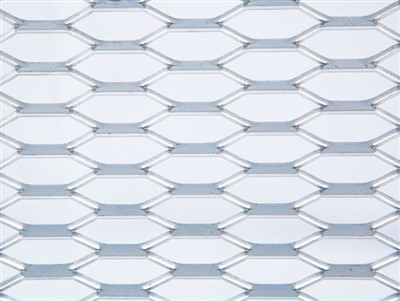
Hey there, if you’re reading this, odds are you’re either eyeing decorative expanded metal for a project (think accent walls, bar railings, restaurant facades—you name it) and stuck on what finish will actually make it pop, or maybe you’re a fellow supplier and curious about the tricks of the trade. Either way, I’ve got you. I’ve been working with decorative expanded metal for over 10 years, day in and day out, sourcing, finishing, and shipping this stuff to designers, contractors, and small business owners all over, and let’s be real—choosing the right surface treatment isn’t just about making it look pretty. It’s about how it holds up to spills, foot traffic, weather, even that random graffiti kid that sometimes shows up to city buildings. I’m not here to ramble with industry jargon no one uses outside a trade show panel, so let’s break down the most common, actually useful surface treatments for decorative expanded metal, straight from the shop floor. Decorative Expanded Metal

First, let’s get one thing clear: decorative expanded metal is way different from the industrial stuff you see on warehouse cages or loading docks. Industrial expanded metal is all about strength and cost, no one cares if it has a little scuff or a dull finish. Decorative? We’re talking about stuff that’s meant to be a focal point—so the treatment has to balance good looks, durability, and budget, because not every client has a million dollars to throw at a custom facade. Let’s start with the most popular one, hands down, and the one I sell most: powder coating. I can’t even count how many times a client comes in and says “just powder coat it black” and that’s that. Wait, no, it’s not that simple. Powder coating isn’t just a color—let’s get into it.
Powder coating works by electrostatically spraying dry powder (made of resin, pigments, and other stuff) onto the expanded metal, then baking it in an oven so it melts into a hard, uniform film. Why is this the go-to? First, way more durable than wet paint. If you scratch powder coat, it doesn’t chip as easily—you have to actually dig into it to get the metal underneath exposed. It also comes in literally every color under the sun, from matte white for that minimalist café to metallic gold for a fancy lobby. Oh, and there are finishes too: matte, satin, gloss, even textured finishes like hammered or stone, which add extra visual interest without needing to add extra parts. Wait, but what’s the catch? Powder coating is best for indoor or sheltered outdoor use, right? If you leave it out in direct sun year-round, certain colors—super bright reds, neons—will fade after a couple years. It’s also a bit more expensive than wet paint, but not by much, and the longevity makes it worth it. I always tell clients if they’re doing an accent wall inside, powder coat is the way to go. If it’s going on a beachside patio, I’ll mention other options that hold up better to salt air. That’s part of my job—matching the treatment to the project, not just pushing what’s easiest to apply.
Next up, wet paint. I know, it sounds old-school, but it still has its place. Wet paint is liquid paint applied with a spray gun or even a roller, depending on the project. Why would anyone choose this over powder coating? Well, first, it’s way cheaper for small orders. If a client needs a single 2ft x 2ft panel for a small bathroom, ordering a custom powder coat is overkill—wet paint takes a fraction of the time and costs less. It also gives a softer, more hand-applied look that some designers love, especially for rustic or vintage projects. But the downsides? It’s not nearly as durable. If you bump it with a chair, it chips. It fades faster in sun, and it can peel if it’s exposed to moisture. Also, you have to be careful with how you apply it—expanded metal has those little gaps, so wet paint can pool in the valleys, leaving an uneven finish. I usually only recommend wet paint for indoor, low-traffic projects, or for clients on a super tight budget. It’s not my first pick, but it works when you need it to.
Now, something that’s been blowing up lately for modern projects: anodizing. Wait, I know what you’re thinking—anodizing is for aluminum, right? Yeah, mostly, but we also do it on stainless steel too, depending on the alloy. How does anodizing work? It’s an electrochemical process that thickens the natural oxide layer on the metal’s surface, so it’s not just a coating sitting on top—it’s part of the metal itself. That’s why it’s way more corrosion-resistant than powder coat or paint. If you have a decorative expanded metal facade for a downtown building, or a railing that’s going to get splashed with water all the time, anodizing is perfect. It comes in a bunch of colors too—silver (the natural aluminum look), black, bronze, even shades of blue and green that look super sleek. And no fading! Because the color is embedded into the oxide layer, not sprayed on, so it can hold up to sun, rain, salt air for decades. The only downsides? It’s more expensive than powder coat, and you’re limited to colors that are possible with the anodizing process—you can’t get that exact custom neon pink like you can with powder coat. But for projects where longevity is key, it’s worth every penny. I had a client last year who put anodized expanded metal on a rooftop bar in Miami, and he told me a year later it looked exactly the same as the day we installed it. That’s the stuff that keeps me going.
Wait, let’s talk about something for people who want that industrial, raw look but still want it to hold up. Hot-dip galvanizing? No, wait, that’s for super heavy industrial stuff, it’s way too rough and not aesthetically pleasing. Oh right, we have electroplating. Electroplating is when you coat the expanded metal with a thin layer of another metal, like zinc, chrome, nickel, or even gold. I use electroplating a lot for custom projects where a client wants a specific metallic look that’s not possible with anodizing. For example, chrome plating gives that super shiny, mirror-like finish that looks amazing on restaurant bar fronts. Gold plating is popular for luxury retail displays. But the catch here is thickness—electroplating is a very thin layer, so if you scratch it, you’ll see the base metal underneath. It’s also more prone to tarnishing, especially if it’s not kept indoors. I always tell clients if they want that shiny chrome look for a dining room accent wall, that’s fine, but don’t put it on a outdoor fence, because rain and pollution will make it dull in a couple years.
Oh, and don’t forget about clear coating! Wait, clear coating isn’t a standalone treatment, right? It’s a topcoat that you put on pretty much any of the above to add extra protection. If you have powder coated expanded metal that you’re putting outdoors, a clear UV-resistant clear coat will prevent fading. If you have electroplated chrome that you want to keep shiny, a clear coat will stop tarnishing. It’s a small extra step that makes a big difference. I actually recommend clear coating for almost all outdoor projects, no matter what the base treatment is. It’s not expensive, and it adds years to the life of the finish.
Wait, there’s one more treatment that’s been getting more requests lately, especially from homeowners and boutique designers: patina. Patina is that aged, rusty look you see on old copper or bronze, right? A lot of people want that rustic, vintage vibe for interior projects like fireplace surrounds or kitchen backsplashes. How does that work? We can either let natural patina happen (if we use real copper or bronze expanded metal, it will develop a patina over time as it’s exposed to air and moisture) or we can use chemical patinas to speed up the process, so you get that look immediately instead of waiting a year. But patina is tricky. It’s not as durable as powder coat or anodizing, and it can change over time. If you spill water on it, it might leave a stain, and the color can shift as it ages. But if that’s the look you’re going for, it’s unbeatable. I did a project last year for a farm-to-table restaurant where they wanted a fireplace surround made of copper expanded metal with a bright, deep patina, and using the chemical patina process got them exactly what they wanted without waiting for it to develop naturally. Just make sure you tell clients that patina is a living finish, it will change over time, that’s part of the charm.
Wait, let’s talk about what I don’t sell very often, for good reason: bare metal. Yeah, some people want that raw, industrial look, but unless you’re using it in a space that’s not going to get touched, exposed to elements, or stained, bare metal will rust, tarnish, and get damaged really quickly. I had a client a few years ago who wanted bare steel expanded metal for a retail store wall. I warned him it would rust, he went ahead anyway, and six months later he was back asking us to come sand and powder coat it, because it looked like a mess. Bare metal only works for very specific, controlled environments, like a museum exhibit that’s not going to be touched. For almost all projects, you need a treatment.
Now, let’s get real for a second. I know this can be overwhelming. There are so many options, how do you pick? Let me break it down by use case, because that’s what my job is—helping people make the right call. If your project is indoor, low-traffic, budget-conscious: go with powder coat or wet paint. If it’s outdoor, needs to hold up to harsh elements (sun, rain, salt, pollution): anodizing or powder coat with a clear UV topcoat. If you want a custom metallic look, short-term interior use: electroplating. If you want that rustic, aged look for interior: patina. And always, always ask about maintenance. Some finishes need to be wiped down with specific cleaners, others just need a damp cloth.
Wait, let’s add a quick note about expanded metal itself—we’re not just cutting metal sheets, we’re stretching them, so the surface is a little bit different from smooth metal. All these treatments work on expanded metal, but sometimes you might need to adjust the application. For example, when powder coating, we make sure to get powder into all those little gaps so the finish is uniform, no bare spots. That’s the kind of small detail that makes my work stand out. I don’t just ship out a panel, I make sure it’s finished correctly, so it looks good and lasts.
At the end of the day, surface treatment for decorative expanded metal is all about balancing form and function. You don’t want something that looks great for a month then falls apart, and you don’t want something that’s so durable it looks boring. That’s why I spend time talking to every client, asking them where the panel is going, how it will be used, what their budget is, before I even suggest a finish. I’ve had clients come in thinking they want the cheapest option, only to realize a little extra for anodizing will save them money in the long run because they won’t have to re-do it in two years.
If you’re in the middle of planning a project, or you’re not even sure what you need yet, don’t stress. I’m here to help. Whether you need a single small panel for a home upgrade, or a full facade for a commercial building, we can work with you to pick the perfect surface treatment that fits your style, your budget, and how long you need it to last. Just reach out, tell me about your project, and we’ll figure it out together. No pushy sales talk, no confusing jargon, just honest advice from someone who’s been doing this for years.
Small Hole Expanded Metal References:
- Metal Decorative Expanded Mesh: Surface Treatment Guide, Industrial Finishing Association, 2022
- Anodizing vs. Powder Coating for Architectural Metals, Architectural Metal & Glass Magazine, 2021
- Surface Finishing for Decorative Metals, Society for Surface Finishers, 2020
- Electroplating Processes for Aesthetic Applications, Plating and Surface Finishing Journal, 2023
- Patina Finishes for Architectural Metalwork, Design for Spaces, 2022
Anping Yilida Metal Wire Mesh Co., Ltd.
Anping Yilida Metal Wire Mesh Co., Ltd. is one of the most reliable decorative expanded metal manufacturers and suppliers in China, also supports customized service. Please feel free to buy bulk high quality decorative expanded metal made in China here from our factory.
Address: Wire Mesh Development Zone, Anping, Hebei Province, China
E-mail: sales@wiremesh-yg.cn
WebSite: https://www.yilidametal.com/
