If you’ve ever sourced slitting equipment for a coil processing line, you know that the upfront price tag is only one piece of the puzzle. As a slitting machine supplier with 12 years on the floor helping factories keep their lines running, I can’t tell you how many times I’ve heard a customer say, “This machine is cheaper than the last one—what’s the catch?” More often than not, the catch isn’t hidden in the purchase price, but in the maintenance costs that creep in over the machine’s lifespan. Let’s break down what those costs actually look like, why they vary so much, and how to plan for them so you don’t get blindsided six months after installation. Slitting Machine
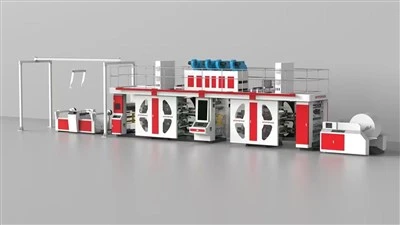
First, let’s get one thing straight: slitting machines aren’t a set-it-and-forget-it piece of gear. They slice large metal, paper, plastic, or fabric coils into narrower, uniform strips—often at speeds that top 1,000 feet per minute. With that kind of repetitive force, every part from the blades to the bearings takes a beating. Maintenance costs fall into two broad categories: routine scheduled maintenance (the stuff you do every month, quarter, or year to prevent breakdowns) and reactive maintenance (the emergency fixes you hope you never have to pay for). Both add up, but they’re highly dependent on the machine’s design, the materials you run through it, and how well you maintain it over time.
Let’s start with the biggest line item for any slitting machine: blades. Slitting blades are the workhorses here, and their lifespan is non-negotiable when it comes to quality cuts. A set of top and bottom slitter blades can cost anywhere from $300 for a basic carbon steel set to $2,500 for high-speed steel (HSS) or carbide-tipped blades, depending on their size and the materials they’re built for. For example, if you’re slitting thick stainless steel or aluminum, you’re going to need much harder blades than someone running thin paper or lightweight plastic. The frequency of blade changes also varies: someone running 20 hours a day, five days a week, slitting tough material might need to replace blades every 100,000 to 150,000 feet of coil. That translates to a blade cost of roughly $0.005 to $0.02 per foot of material, or about $1,200 to $4,800 per month for a high-volume production line. If you skimp on cheaper blades to save a few bucks upfront, you’ll end up changing them more often, and dull blades cause other headaches—like burrs on edges, wasted material, and even damage to the machine’s arbors, which add unexpected repair costs.
Next up, arbor and bearing maintenance. The arbor is the shaft that holds the slitter blades in place, and it spins at high speed while the machine is running. Most quality slitters use sealed, precision bearings, but even those need lubrication and occasional replacement. The arbor itself is built to last, but if you don’t align the blades correctly during setup, you’ll put uneven stress on the bearings, leading to premature wear. A set of replacement precision bearings for a 60-inch slitting line can run $800 to $1,500, and if you have a reactive failure, you might also need to pay for a service technician to disassemble and reassemble the arbor—add another $500 to $1,000 in labor. Routine bearing maintenance is cheap by comparison: just $20 to $50 per bearing for lubricants, done every 500 hours of operation. The key here is to stick to a schedule, not wait for the arbor to make a grinding noise or the line to vibrate—by then, you’re looking at a full day of downtime and costly parts.
Then there’s the mechanical and hydraulic system, which is often overlooked but critical for smooth operation. Many slitting machines use hydraulic systems to adjust blade gaps, tension control, and coil loading. Hydraulic fluid needs to be changed every 1,000 to 2,000 hours, and filters every other fluid change—costing around $200 to $400 annually for parts and labor. Hoses and seals in the hydraulic system degrade over time, especially if the machine is run in a dirty or high-temperature environment. A single leaking seal might cost $50 to replace, but if you don’t fix it, you can contaminate the hydraulic fluid, leading to damage to the pumps or valves. A replacement hydraulic pump can run $2,000 to $4,000, plus labor, so proactive maintenance here saves you big money. For machines with electrical or pneumatic systems instead of hydraulic (common in smaller, lower-volume slitters), the maintenance costs shift to filters, solenoids, and sensors—usually $150 to $300 per year for parts, with occasional sensor replacements that run $100 to $300 each.
Downtime is a hidden maintenance cost that most buyers don’t factor into their budget. When a slitting machine goes down, every hour of downtime costs you production, missed deadlines, and potentially penalties from customers. I recently worked with a customer running a 48-inch slitting line for automotive aluminum parts. They had skimped on a cheaper, entry-level slitter three years prior, and their annual reactive maintenance costs were $18,000—on top of parts and labor. But the real hit was downtime: when their main arbor bearings failed, they were down 12 hours, costing them $22,000 in lost production that month. That $18,000 in maintenance plus $22,000 in downtime meant they were paying $40,000 that year for a machine that had an upfront price of $85,000. Compare that to a customer who purchased a mid-tier slitter from us last year, with a planned maintenance schedule and premium parts: their projected annual maintenance cost is $6,500, with zero reactive failures in the first 10 months, and downtime of less than 2 hours total for routine blade changes. That’s the kind of number that makes a real difference in a factory’s bottom line.
Environment also plays a huge role in maintenance costs. If you run your slitting machine in a dusty metal fabrication shop, where metal shavings get into every crevice, your filters, bearings, and blades will wear out 20 to 30 percent faster than if the machine is in a climate-controlled, clean paper or plastic processing facility. We’ve had customers who run slitters in facilities with dust collection systems report blade life 40 percent longer than those without, simply because less debris gets into the slitting point and the machine’s moving parts. It’s not just about the machine itself—it’s about the space you put it in, and how that affects wear and tear.
Now, let’s talk about how you can lower your maintenance costs without sacrificing quality. First, invest in a machine built with durability in mind, not just low upfront cost. Entry-level slitters often use lower-grade blades, thinner arbors, and sealed bearings that aren’t designed for high-volume runs, which leads to higher long-term costs. Premium slitters use carbide-tipped blades, precision-ground arbors, and heavy-duty bearings that are built to last, and while their upfront price is 20 to 30 percent higher, maintenance costs over 10 years are often half that of a lower-end machine.
Second, stick to a planned maintenance schedule. This isn’t a guess—you can work with your slitting machine supplier to build a schedule tailored to your specific line, the materials you run, and how many hours you operate. For example, our team provides every customer with a customized maintenance guide that outlines exactly what to check every 100 hours, 500 hours, 1,000 hours, and annually. We also offer annual service checks where our technicians come on-site to align blades, inspect bearings, replace seals, and calibrate the tension control system—for a flat fee that’s predictable, so you don’t have to worry about unexpected repair bills.
Third, train your operators to do basic maintenance. Most slitting machine issues start with operator error: running the machine at speeds it’s not designed for, misaligning blades during a changeover, or skipping lubrication because they’re in a hurry to hit a production target. We hold free operator training sessions for all our customers, teaching them how to check blade sharpness, align the arbor, spot early signs of bearing wear, and change filters—skills that reduce the need for external service calls and reactive repairs.
Let’s get specific with numbers to make this real. For a mid-sized slitting line (60 inches wide, running 10–15 hours a day, five days a week, processing aluminum and steel):
- Annual routine maintenance: $5,000–$7,500 (blade changes, bearing lubrication, fluid/filter changes, routine part checks)
- Annual reactive maintenance (if well-maintained): $2,000–$4,000 (minor seal replacements, occasional sensor adjustments)
- Annual downtime cost for maintenance: Less than $3,000 (planned downtime for blade changes, which can be scheduled during lulls in production)
Total annual maintenance cost: $10,000–$14,500.
Compare that to an entry-level line for the same use case:
- Annual routine maintenance: $7,000–$9,000 (more frequent blade changes, bearing lubrication)
- Annual reactive maintenance: $8,000–$12,000 (premature bearing failure, hydraulic pump issues, arbor wear)
- Annual downtime cost for maintenance: $8,000–$15,000 (unplanned downtime for emergency repairs, missed deadlines)
Total annual maintenance cost: $23,000–$36,000.
That’s a huge gap, and it adds up over the machine’s 10–15 year lifespan. The entry-level machine’s upfront price might be $60,000 vs. $85,000 for a mid-tier one, but over 10 years, you’d spend $230,000–$360,000 on maintenance for the entry-level model, vs. $100,000–$145,000 for the mid-tier one. Factor in downtime, and the gap gets even wider.
Now, I know what some of you are thinking: “What if I only run my slitter part-time? Does that change anything?” Absolutely. For a small shop running 40 hours a week, processing paper or thin plastic, maintenance costs drop significantly. Blade life is longer, bearings don’t run as hot, and fluid changes are less frequent. For that use case, annual maintenance is often $2,000–$4,000, with very few reactive repairs. The rule still holds, though: buying a durable machine, even for low-volume use, means fewer headaches and more consistent cuts.
At the end of the day, the maintenance cost of a slitting machine isn’t a fixed number you can pull off a spec sheet. It’s dependent on how you use the machine, what materials you run, and how well you invest in its upkeep. Too many buyers fixate on the upfront price, only to get stuck with a machine that bleeds them in maintenance costs and downtime for years. The right approach is to look at total cost of ownership, not just the initial purchase price.

If you’re in the market for a slitting machine and want a clear breakdown of maintenance costs tailored to your production needs, I’d be happy to walk through that with you. We don’t do one-size-fits-all quotes, and we’ll never push a machine that’s too much or too little for your line. We’ll share real case studies from customers with similar operations, outline their annual maintenance budgets, and help you build a plan that keeps your line running smoothly without breaking the bank. Reach out to our team to discuss your requirements and get a customized proposal that accounts for every part of the process—including long-term maintenance, so you can plan with confidence.
Flexo Printing Machine References
Slitting Technology Handbook. Society of Manufacturing Engineers, 2021.
Coil Processing Equipment Maintenance Best Practices. Association for Iron and Steel Technology, 2020.
Total Cost of Ownership for Industrial Processing Machinery. Industrial Maintenance and Plant Operations Magazine, 2022.
Wenzhou Haidobao Machinery Technology Co., Ltd.
As one of the most professional slitting machine manufacturers in China, we have world-leading production equipment and strong manufacturing capabilities. Please rest assured to wholesale durable slitting machine for sale here from our factory. All customized machines are with high quality and competitive price.
Address: No. 116, Xinglong Road, Wanquan Town, Pingyang County
E-mail: 214949666@qq.com
WebSite: https://www.hdbmachinery.com/
