Hey there! If you’re here because you’re eyeing fast roll-up doors for your facility—whether it’s a warehouse, a loading dock, a cold storage spot, or even a manufacturing plant—you’ve probably asked yourself this exact question: Are fast roll-up doors fire-resistant? Let me cut through the noise and give you the straight dope, not just the sales fluff we see all too often from door suppliers. I’ve been deep in the fast roll-up door game for years, so I’ve talked to hundreds of facility managers, safety officers, and even some building inspectors about this very thing. Fast Roll-up Door
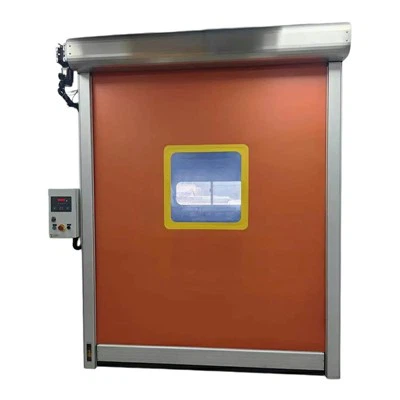
First off, let’s clear up a common mix-up: “fire-resistant” isn’t the same as “fireproof.” Nothing is truly fireproof, right? Even concrete will crumble if exposed to extreme enough heat for long enough. But fire-resistant products are built to withstand flames, heat, and sometimes smoke for a set amount of time—enough to give people time to evacuate, stop a small fire from spreading, and let firefighters do their job. That’s the bar we’re working with here for fast roll-up doors, because they’re such a big part of commercial and industrial safety setups.
Now, let’s get into what makes a fast roll-up door fire-resistant (or not, for that matter). Most standard fast roll-up doors are made with things like vinyl, polyester, or fabric laminates. Those are great for speed—they zip up and down in like 2 to 10 seconds, which saves energy, keeps out bugs, and stops cold air from escaping—but they’re not inherently fire-resistant. Put a blowtorch to standard vinyl, and it’ll melt in seconds. Polyester? It’ll char fast, no question. So if you just buy a run-of-the-mill fast roll-up door and call it fire-resistant, that’s a red flag. You need to go for doors that are specifically manufactured with fire-rated materials, not just slapped together like the basic ones.
Wait, let’s talk about fire ratings, because this is non-negotiable. A lot of suppliers will toss around terms like “1-hour rated” or “3-hour rated,” but you have to know what that actually means. Those numbers refer to how long the door can hold up against a standard fire test—you know, the ones that mimic real building fires, heating up at a specific rate over time. For example, a 1-hour fire-rated door has to keep flames from passing through for at least 60 minutes, plus hold its structural shape (so it doesn’t collapse) and stop harmful heat transfer enough that the other side of the door doesn’t get too hot. That’s the kind of cred you want.
What materials are used for fire-resistant fast roll-up doors, anyway? The big ones are either coated fiberglass or intumescent fabric. Let me break that down. Coated fiberglass is stiff, strong, and treated with fire-retardant chemicals. Those chemicals don’t just make the fabric burn slower—they make it stop burning on its own, so if a small flame touches it, it self-extinguishes. Intumescent fabric is even cooler (pun intended): when it gets hit with heat, it swells up into a thick, charred, insulating layer that acts like a barrier. That’s the stuff that’s used in a lot of high-stakes places, like chemical plants or facilities that store flammable goods, because it can block heat way better than regular fabric.
But here’s the thing—material is only half the battle. The door’s construction matters a ton too. You can have the best fire-resistant fabric in the world, but if the roll-up mechanism, the tracks, or the seals are garbage, that door won’t do squat when a fire hits. A fast roll-up door has to have tight seals along the edges and between the slats (or fabric panels) to stop smoke and flames from seeping through the gaps. If there’s a big gap at the bottom where the door meets the floor, fire is gonna get through there fast. Also, the roll-up assembly can’t warp or collapse when heated. We test all our fire-resistant doors to make sure the motor, the cables, and the frame hold up even under high heat—because what good is a door that can stop flames only to fall apart when you need it most?
Now, let’s get real about when you actually need a fire-resistant fast roll-up door. If you’re a small warehouse storing just boxes, maybe the standard fast door is fine for keeping energy costs down. But if you’re handling flammable liquids, working with chemicals, have a loading dock between two separate buildings, or store things like aerosols or propane, you should definitely get a fire-rated one. And don’t sleep on local building codes—most cities and states have strict rules about fire barriers in commercial facilities, especially ones with high foot traffic or lots of stored goods. Skipping a fire-rated door just because it’s a little more expensive? That’s a risk I’d never recommend, and I’ve seen too many facilities get hit with fines or even worse because they cut corners here.
Wait, let’s bust a myth I hear all the time: “Fast roll-up doors are too flimsy for fire resistance.” Yeah, that’s what people assume because they zip up so quick. But here’s the thing—fire-resistant fast roll-up doors aren’t flimsy at all. The fire-rated fabric is reinforced with extra layers, the frames are made of thick steel, and the mechanisms are built to handle more stress. They’re still fast—most of our fire-rated models go up in 5 seconds, same as our standard ones—so you don’t have to sacrifice speed for safety. That’s the whole point, right? You want a door that works for your daily operations, not one that’s a total pain to use when there’s no fire.
I should also mention testing, because that’s how you know a door is actually fire-resistant. A door without a third-party certification isn’t worth the paper it’s printed on. The main certs in the U.S. are UL (Underwriters Laboratories) ratings, and in other countries, you’ll see CE or FM (Factory Mutual) ratings. If a supplier can’t show you a UL label for their fire-resistant fast roll-up door, walk away. We make sure every fire-rated door we sell goes through those official tests, so we can stand behind that 1-hour or 3-hour rating—no fine print, no “it’ll probably work.”
Let me tell you about a recent project that drives this home. We worked with a pharmaceutical plant a few months back. They had two wings of the facility, one where they stored raw materials, and another where they did packing and shipping. They needed a door between them that was fast enough for forklifts to zip through all day, but also fire-resistant in case a chemical spill sparked a fire. If they’d gone with a standard fast door, OSHA and their local fire marshal would have shut them down. The fire-rated fast roll-up door we installed? It’s been working flawlessly for months—forklifts race through it nonstop, and it’s held up perfectly in all the seasonal heat and humidity the area gets. That’s exactly what a fire-resistant door is supposed to do.
Now, what about the downsides of fire-resistant fast roll-up doors? Let’s be honest—they’re more expensive upfront than standard ones, no question. But think of it as an investment, not a cost. If a fire does break out, that door could stop it from spreading to the rest of your facility, saving you hundreds of thousands (or millions) in damage, not to mention lives. Also, they need a little more maintenance than standard doors. The fire-retardant chemicals in the fabric can break down over time if you expose the door to a lot of harsh chemicals or extreme weather, so you have to get them inspected every couple of years, same as any other fire safety equipment. But that’s a small price to pay for peace of mind.
Wait, another point: smoke resistance. A lot of people forget that smoke is just as dangerous as fire. Fire can hurt you, but smoke inhalation kills way more people in building fires than flames do. Good fire-resistant fast roll-up doors are also smoke-resistant, because the tight seals keep smoke from seeping through. So that door isn’t just stopping flames—it’s giving your employees extra time to get out of the building. That’s a huge benefit you don’t get with a standard door.
I get it—when you’re running a business, you’re focused on bottom line, speed, and getting stuff done. Safety can feel like an afterthought sometimes. But fast roll-up doors are everywhere in facilities, so they shouldn’t be a weak spot in your fire safety plan. A lot of suppliers will tell you their doors are fire-resistant, but don’t take their word for it. Ask for certifications, ask what materials they use, ask if they’ve tested them. At the end of the day, the last thing you want is to find out your door won’t hold up when you need it most.
So to wrap this up: Yes, fast roll-up doors can be fire-resistant, but only if they’re specifically built for that. Standard fast doors are not fire-resistant—they’re great for speed and energy, but they’ll go up in smoke if a fire hits. If you need a fire-resistant one, look for third-party certified (UL, CE, FM) models made with treated fiberglass or intumescent fabric, with tight seals and a sturdy mechanism. They cost a bit more, but they’re worth every penny for the safety of your team and the protection of your facility.

If you’re shopping around for a fast roll-up door and want to talk through whether a fire-resistant model is right for your space, hit us up. We can walk you through the different options, explain the ratings, and even help you figure out exactly what you need based on your facility’s layout and local codes. Don’t wait until it’s too late—your safety is too important to cut corners.
Fast Roll-up Door References:
- Underwriters Laboratories. (2022). Standard for Safety for Fire Tests of Door Assemblies (UL 10B).
- Factory Mutual Insurance Company. (2021). Approval Standard for Fire Doors and Shutter Assemblies (FM 4880).
- National Fire Protection Association. (2023). NFPA 80: Standard for Fire Doors and Other Opening Protectives.
- International Code Council. (2022). International Building Code (IBC) Chapter 7: Fire and Smoke Protection Features.
Suzhou Denasi Intelligent Technology Co., Ltd.
As one of the leading fast roll-up door manufacturers and suppliers in China, we warmly welcome you to buy discount fast roll-up door for sale here from our factory. All products are with high quality and competitive price. Contact us for quotation.
Address: No. 898 Jinsheng Road, Jinjiaba, Lili Town, Wujiang District, Suzhou City, Jiangsu Province
E-mail: ChinaDenas@163.com
WebSite: https://www.densiclean.com/
