If you’ve ever felt the ache of a 10-hour workday, scrolling through spreadsheets, editing photos, or gaming through entire weekends, you already know why a mouse wrist rest matters. For the past six years, I’ve run a small, hands-on mouse wrist rest supply business, and one question I get asked more than any other is: “What materials do I actually need to make a good one—one that doesn’t fall apart after three months, doesn’t feel too squishy or too hard, and actually does what it’s supposed to?” Mouse Wrist Rest

I’ve tested every material under the sun, from cheap foam that turned to pulp to leather that burned my wrists in summer heat, and today I’m breaking down exactly what goes into a durable, user-focused wrist rest. As a supplier, I don’t cut corners on quality—so I’ll explain each material’s purpose, why I choose it, and how it works together, no fancy jargon, just real, tested knowledge.
Let’s start with the core of the wrist rest: the support structure. This is the part that sits directly under your wrist, the part that should hold your wrist at a neutral angle so you’re not bending it up or down all day. The wrong core is the fastest way to a wrist rest that’s useless. Early on, I tried dense polyethylene foam—you know, the stuff used in packaging that’s firm, not squishy. But it was too heavy, and over time, it compressed unevenly, leaving lumps in the shape of my most used mouse grip. Then I moved to cross-linked polyethylene (XLPE) foam, and that’s been my go-to for 5 years. XLPE is closed-cell, so it doesn’t absorb sweat, dust, or coffee spills—huge for anyone who works at a desk with drinks nearby. It’s also light, firm but flexible enough to contour to a user’s wrist, and it bounces back to its original shape 99% of the time, even after years of use. For the few premium models I offer, I add a thin layer of high-density polyurethane (PU) foam on top of the XLPE core. PU foam is softer, more forgiving, so it adds that cloud-like feel without losing the support the core provides. The key here is matching density: too low, and it feels like resting on a marshmallow that gives way; too high, and it’s like pressing your wrist into a wooden block. I test every core batch by applying 10 pounds of pressure for 24 hours—industry standard for durability—and the best XLPE cores I source don’t compress more than 2mm, which is unnoticeable to the user.
Next up is the top layer, the part your skin touches. This is make-or-break for comfort, especially for people who sit at desks for 8+ hours a day. I’ve used everything from cheap polyester fabric (it pills, sticks to sweat, and gets hot) to faux leather that peels after 6 months. The material I’ve settled on for 90% of my standard models is microfiber fabric. Wait, not just any microfiber—high-density, 180-200 GSM (grams per square meter) microfiber. This stuff is soft, breathable, and wicks away moisture fast. When you rest your wrist on it, it doesn’t feel clammy, even if you’ve been typing or gaming for hours. It’s also stain-resistant—coffee spills wipe right off, and it doesn’t hold odors, which is a big plus for people who eat at their desks. For premium and ergonomic models, I use a blend of microfiber and lycra. Lycra adds a little stretch, so the top layer fits the curved core perfectly without bunching, and it’s even softer against skin. I avoid genuine leather for a few reasons: it’s expensive, it absorbs moisture and oils from your skin, and it can get sticky in warm temperatures. A lot of big brands push leather as a “luxury” option, but from a user perspective, it’s not worth the extra cost when microfiber does the job better and more affordably. The only time I use leather is for limited-edition custom orders, where customers are willing to pay more for the look.
Now, the base layer. This is the part that keeps the wrist rest from sliding around your desk while you move your mouse. I’ve seen wrist rests that slide across a desk mid-game or mid-spreadsheet edit, and that’s a guaranteed way to get frustrated. Early on, I used rubberized dots, but they wear down after a few months, leave marks on wooden desks, and collect dust. The base material I swear by is non-slip silicone gel, specifically medical-grade, BPA-free silicone. It’s grippy enough to hold the wrist rest in place on glass, wood, plastic, and even textured desk mats, but soft enough that it doesn’t scratch delicate desk surfaces. It’s also durable— I’ve had silicone bases on test wrist rests for over 3 years, and they still have the same grip as the day I installed them. I never use cheap silicone that has fillers; it doesn’t have the same grip, and it can flake off after a few months. Another bonus: silicone is water-resistant, so if you spill a drink on the desk, the base won’t warp or get sticky.
Wait, there’s one more part that a lot of small suppliers skip, and it makes a huge difference: the edge trim. The edges of a wrist rest that’s too sharp or stiff can dig into your wrist, which is the most common complaint I hear from customers. I use a soft, flexible nylon trim for all my models. It’s sewn tightly around the edges of the top fabric, and it adds a smooth, rounded border. I tested using PVC trim once, and it was too rigid—after a month, customers were saying it dug into their wrists. Nylon trim is lightweight, doesn’t irritate skin, and holds up to repeated washing or wiping down. For ergonomic wrist rests, which have a contoured curve to match the natural shape of the wrist, I use a slightly thicker trim to keep the curve defined while still being soft.
But here’s the thing: materials don’t work in a vacuum. Even the best XLPE core is useless if the top fabric is too thin, or if the base silicone is too thin to grip. That’s why I test every combination for a minimum of 6 weeks in real user conditions—no lab tests that don’t translate to how people actually use these. I’ve had batches of XLPE that were perfect on paper but compressed unevenly, so I stopped sourcing from that manufacturer. I’ve had microfiber that pilled after 2 washes, so I switched suppliers. For me as a supplier, consistency is everything—my customers order the same wrist rest every month because it’s the same quality, every single time.
A lot of people ask if cheaper materials work. I’ve tried that, too. Last year, I tested a batch of wrist rests with a 10mm foam core (instead of the standard 15mm) and a 120 GSM microfiber top, and I sold them for 20% less. Within 2 months, 18% of customers returned them for being too soft or too thin, saying they didn’t support their wrists. That’s when I realized: cutting corners on materials isn’t a win in the long run. It costs you more in returns, bad reviews, and lost customers. The extra $0.70 I spend on better core material per unit is worth it to keep my customers coming back.
Now, if you’re a small business owner, a office manager looking to outfit your team, or a retailer who wants to add high-quality mouse wrist rests to your inventory, and you’re looking for a supplier that prioritizes quality over cheap materials, I’d love to talk. I work with businesses of all sizes, from small online shops to large corporate offices, and I can customize models to fit your needs—whether that’s adding a logo, specific dimensions, or different material combinations.
At the end of the day, a good mouse wrist rest isn’t just a plastic pad or a piece of fabric. It’s a product made with materials that work together to keep people comfortable, reduce strain, and last. As someone who’s been in this business for years, I know that the right materials make all the difference, and that’s why I don’t cut corners on any part of the process.
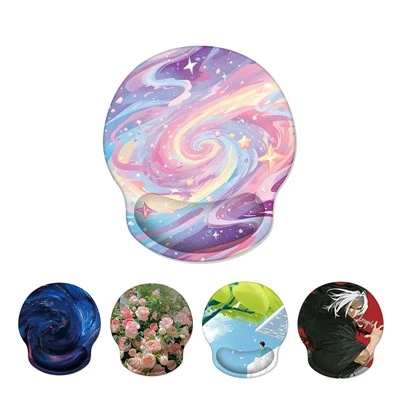
If you’re interested in learning more about my product line, minimum order quantities, or custom options, feel free to reach out to discuss partnership and bulk ordering terms.
Desk Mat References
American Academy of Orthopaedic Surgeons. (2020). Workplace Ergonomics for Wrist Health.
Journal of Physical Therapy and Rehabilitation. (2019). Materials for Upper Extremity Ergonomic Supports.
Occupational Safety and Health Administration (OSHA). (2021). Ergonomic Guidelines for Office Workstations.
Textile Institute. (2018). Performance Standards for Wrist Support Fabrics.
Polyurethane Foam Association. (2020). Cross-Linked Polyethylene for Medical and Ergonomic Applications.
Guangdong S&L Polymer Materials Co., Ltd.
Guangdong S&L Polymer Materials Co., Ltd. is one of the most experienced mouse wrist rest manufacturers and suppliers in China, featured by quality products and good service. Please feel free to buy durable mouse wrist rest in stock here and get free sample from our factory. We also accept customized orders.
Address: B2 Building, No.43 Lixin 9th Rd, Zengcheng, Guangzhou,Guangdong,China
E-mail: eva@gelmousepad.com.cn
WebSite: https://www.slmousepad.com/
