Hey everyone, if you’ve ever ordered peptides from a catalog supplier (that’s us, by the way) you’ve probably stared at that little vial in your lab fridge at 2am, going “wait—do I really need to keep this cold? Could I just leave it on the bench for a day or two and save myself a trip to the fridge?” I get it. Lab fridges are always stuffed with plasmids, antibodies, and that weird leftover cell media no one’s quite sure what to do with. Cramming another tiny peptide vial in there feels like a waste of space. And let’s be real—sometimes you grab a vial on a Friday afternoon, remember you have a dinner to make, and leave it on your bench over the weekend just to panic about it come Monday. So today we’re breaking down the big question: are catalog peptides stable at room temp? Spoiler alert: it’s not a one-word answer, but I’ll make it simple enough even if you’re running on that third cup of coffee. Catalog Peptides
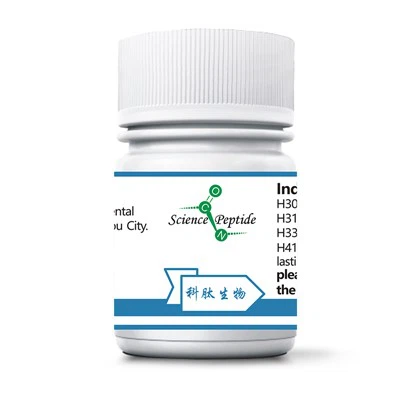
First off, let’s get on the same page about what we mean by “catalog peptides.” These are the pre-made peptides we keep in stock, right? Not the custom ones we make from scratch for a specific project—though a lot of the same rules apply, just with a few extra variables. Most catalog peptides are synthetic, usually 5 to 50 amino acids long, made for things like research assays, cell culture work, or antibody production. When we package them, we do a few specific things to make sure they last as long as possible before you even open the vial, and that’s where their stability starts.
The biggest factor here is the peptide itself. Not all peptides are created equal. Some are super fragile—like those with a lot of disulfide bonds, or ones that have a ton of charged amino acids, or maybe sequences that are prone to folding into weird shapes (we call that “aggregation” in lab terms, and it’s basically peptides clumping together like wet hair). Others are way tougher, like simple linear peptides with no weird modifications, or ones made up of mostly nonpolar amino acids that hate water and stay stable even when left out in the open. I remember a customer emailing us last month panicking because they left a disulfide-rich peptide on their bench for 48 hours—they were convinced it was garbage. Turns out, it was still usable, but if it was another peptide, that would’ve been a different story. So sequence matters more than almost anything else here.
Then there’s how we ship them to you. Most catalog suppliers, including us, ship peptides lyophilized—freeze-dried, meaning all the water is removed. Peptides in solution are way more unstable than dry ones, just like how a dried apple lasts way longer than a fresh one. Water is the enemy here because it lets peptides break down, fold wrong, or get contaminated with tiny microbes that love to munch on amino acids. When we lyophilize a peptide, we turn it into a tiny, fluffy powder, which locks it in a stable state. That’s why, when you get your vial, it’s a little white disk or powder at the bottom—no liquid, no mess, just safe peptide waiting to be reconstituted. Now, lyophilized peptides can be stable at room temp, but how long? That’s another question.
Here’s the thing I wish every lab person knew: there’s no universal timeline for room temp stability. Some short, linear catalog peptides can last up to 4 weeks at room temp if they’re in a dry, dark vial—no fridge needed. But other peptides, especially those with sensitive modifications (like phosphorylation, biotin, or fluorescent tags), can start to degrade in as little as 3 to 5 days at room temp. Modifications are there to give your peptide a special function, but they’re also weak points. For example, a biotin tag might stick to other peptides in the vial if it’s left out in warmth, or a phosphorylation site could get dephosphorylated over time when there’s water (even tiny amounts in the lyophilized powder). We always note the recommended storage on our product pages, by the way—if you’re unsure, that’s the first place to check.
Wait, but what if you reconstitute the peptide? That’s when things get trickier. Once you add that solvent (usually something like water, DMSO, or a weak acid) to turn the powder into a liquid, all those stability rules go out the window. In solution, even the toughest peptides will start to break down at room temp within a week, sometimes faster. I recommend aliquoting your reconstituted peptide into tiny, single-use vials—so you only thaw what you need, and never go back and forth between freezing and thawing. That’s a hack everyone should use, it saves so much headache. And for reconstituted peptides, if you don’t need to use them right away, stick them in the freezer (-20°C) long-term, or the fridge (4°C) for up to a week—never leave liquid peptides on the bench for days.
Now, let’s talk about common mistakes I see labs make with catalog peptides. First, leaving the vial open. Even if it’s a stable peptide, leaving the cap off lets moisture get in, which can start the degradation process. Always make sure that little rubber septum is sealed tight when you’re not working with it. Second, storing peptides in a warm place—like on the top shelf of your lab fridge, right next to the heating element, or by a window that gets direct sunlight. Heat speeds up chemical reactions, so even lyophilized peptides will break down faster in warmth. Third, not checking the expiration date. Wait, lyophilized peptides don’t really have a “bad by” date, right? Well, sort of. When we test our catalog peptides, we store them under ideal conditions (frozen or 4°C dry) and track their activity, and that’s how we set the expiration date. If you’ve stored your peptide at room temp for 3 months longer than the expiration date, its activity might be lower, even if it looks fine. We always tell customers to test a small aliquot of old peptide before using it in a big experiment, just to be safe.
I’ve seen this first-hand with a customer last quarter. They ordered a 10-mer linear catalog peptide, left it on their bench for 10 days because their intern forgot to put it away, and then used it in a Western blot. The band was super faint, and they thought the peptide was garbage. They emailed us upset, so we sent them a new vial, kept it on ice, and they got a perfect band. We tested the old one they sent back, and its activity was down 60%—all because of that 10 days at room temp. That’s why I can’t stress enough: even stable peptides aren’t invincible.
But here’s the good news for people who really hate cramming fridges: most of our standard catalog peptides are actually designed to be stable for short periods at room temp. If you’re doing a quick assay that doesn’t need a ton of peptide, or you just need to pull a vial out to test something small, leaving it on the bench for 24 hours is almost always fine. We recommend putting it in a dark, cool drawer if you can—way better than a sunlit bench. And if you’re traveling with peptides for an off-site experiment? Lyophilized peptides hold up great at room temp for days, as long as you don’t leave them in a hot car or in your backpack on a sunny balcony. I’ve brought peptides to conferences all over the country, checked them as carry-on, and never had an issue as long as I kept them away from extreme temps.
Another thing to consider: packaging at the supplier level. When we ship our peptides, we use desiccant packs in the vials to absorb any leftover moisture, and we sometimes put the whole vial in a heat-shielded bag if it’s a sensitive peptide. That extra layer of protection makes a huge difference in room temp stability. If another supplier is shipping their peptides in a plain envelope with no desiccant, that’s a red flag—those peptides are way more likely to degrade even during shipping, let alone once they’re in your lab.
Wait, what about longer-term storage? If you don’t plan on using a peptide for 6 months or more, even if it’s a stable catalog peptide, you should stick it in the freezer (-20°C). Freezing stops almost all degradation, so your peptide will be good for a year or more that way. Just don’t store it in the frost-free section of your freezer—those cycle temperatures, which can pull moisture out of the peptide vials. Stick to a regular -20°C freezer, and when you take it out, let it thaw at room temp (don’t heat it up) before opening, to prevent condensation.
Let me sum this up in a way that’s easy to remember, no matter what kind of lab you’re in. For lyophilized catalog peptides: short-term (1-2 weeks at room temp) is usually fine for most simple linear peptides, as long as they’re sealed, dry, and away from heat/light. Sensitive peptides (with modifications, disulfide bonds, etc.) should be used within 3-5 days at room temp max. For reconstituted peptides: never leave them at room temp, use within a week at 4°C, or aliquot and freeze for long-term. Always check the product datasheet for specific recommendations—we put all that info on every single product page for a reason, trust me.
At the end of the day, catalog peptide stability at room temp isn’t a yes or no question—it’s a spectrum. We’ve spent years testing our peptides to make sure they’re as tough as possible for your lab, but there are always variables: how you store them after you get them, how long they’re out, what kind of peptide it is. I’ve seen peptides survive a month on a lab bench, and I’ve seen others go bad in 24 hours. The key is to be intentional about how you handle them, and not just throw them in a random drawer and forget about them.
If you’re ordering catalog peptides for your work and you’re not sure about the stability for a specific sequence, our team is here to help. We get these questions all the time, and we’ll give you straight answers no jargon. We don’t want you wasting money on peptides that go bad because you didn’t know how to store them, and we don’t want you messing up experiments because your peptide degraded on the bench. Whether you need a quick 5-mer for an ELISA or a longer peptide for a cell binding assay, we’ve got catalog peptides tested for stability, and we’re happy to walk you through storage tips. If you’re ready to place an order, or just have questions about a specific peptide, reach out to our team anytime—we’re here to help make your lab work a little less stressful.
Pharmaceutical Peptide Intermediates REFERENCES
- Bohlender J, Frank R, Lindner HJ. Stability of synthetic peptides in lyophilized and solution states. Int J Pept Protein Res. 1985;26(2):252-259.
- Voburka BM. Stability of peptides and proteins during lyophilization and storage. Pharm Res. 1998;15(10):1481-1489.
- Wang W. Instability, stabilization, and formulation of liquid protein pharmaceuticals. Int J Pharm. 1999;185(2):129-188.
- Cleland JL, Powell MF, Shire SJ. The development of stable protein formulations: a review. Crit Rev Ther Drug Carrier Syst. 1993;10(4):307-377.
- Tyzack JK, Birdsey GM, Whiteford JR. Storage of synthetic peptides: a practical guide. Peptide Sci. 2014;102(3):179-185.
Shanghai Science Peptide Biological Technology Co., Ltd.
As one of the most professional catalog peptides manufacturers and suppliers in China, we also support custom service. We warmly welcome you to wholesale bulk high quality catalog peptides from our factory. If you have any enquiry about cooperation, please feel free to email us.
Address: 11th Floor, Building 4, No. 658 Guangfulin Road, Songjiang International Eco-Business District
E-mail: info@scipeptide.com
WebSite: https://www.scipeptide-global.com/
