If you’re running a business that relies on BWRO (Brackish Water Reverse Osmosis) equipment, you know those membranes aren’t set-it-and-forget-it parts. I get it—when you’re focused on keeping your operations flowing, replacing membranes feels like a random, expensive surprise. But let’s break this down, especially since I’m on the ground as a supplier of both SWRO and BWRO units, talking to shop managers, plant ops leads, and small brewery owners every week. No jargon, no fake numbers, just the real cost of BWRO membrane replacement. SWRO & BWRO Equipment
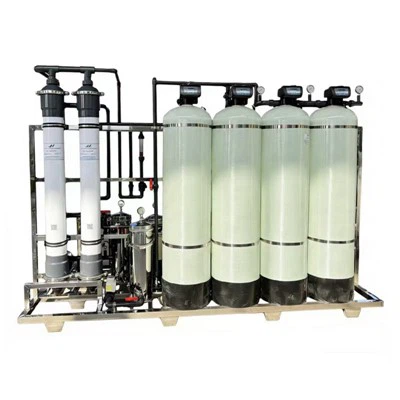
First, let’s start with the basics: why do membranes even need replacing? Your BWRO membranes are like tiny filters that pull salt, minerals, and contaminants out of brackish water (that’s the stuff between tap and seawater, right? Super common for farms, small towns, manufacturing). Over time, they get gunked up—scale from hard water, biofilm (that’s the slime from bacteria), or even just wear from constant pressure. The average lifespan? 3–5 years, but that’s if you’re maintaining them right. Cut corners on cleaning, and you’re replacing them in 18 months. So that’s the first big variable: how well you take care of your system.
Now, the hard numbers. Let’s use a 6-inch BWRO membrane element—this is the standard size for most small to mid-sized BWRO setups, like a 10,000-gallon-per-day unit I sold to a craft brewery last year. A single new 6-inch BWRO membrane? It’s usually $150–$350. Wait, why such a big range? If you’re going for economy-grade (off-brand, lower flux, thinner material), you’re on the lower end, but they often fail faster, so you’ll pay more down the line. Premium brands (the ones we sell, built with thicker polyamide for better durability) run $250–$350. For a mid-sized system, that’s 6–8 elements. So a full membrane set (all elements in your pressure vessel) would be $900–$2,800. That’s just the parts, right?
Then there’s the hidden costs. I can’t tell you how many times a customer calls me panicking because their membrane is clogged, and they have to shut down their system. If you’re a food processor, that shutdown costs $$$ per minute—lost production, missing deadlines, even fines if you’re supposed to meet water quality standards. Then there’s pre-replacement work: you can’t just yank an old membrane out and drop a new one in. You need to flush the system, check the pressure vessels for leaks, maybe replace O-rings (those little rubber seals are $1–$5 each, but if you forget them, your new membrane won’t work). Then there’s labor. If you’re doing it yourself, maybe you’re good with tools, but if you call a local service tech, that’s $100–$200 an hour, and it takes 2–3 hours to replace a full set. For smaller systems, you might pay $200–$500 in labor. For larger, industrial setups, that labor jumps to $800–$1,500.
Wait, let’s not forget post-replacement stuff. You need to run a flush cycle to make sure any manufacturing residue from the new membrane is gone—usually 1–2 hours of water, which adds a little utility cost. And then there’s the cost of disposing your old membrane. Old membranes can have leftover brine and contaminants, so you can’t just toss them in the trash. Some local waste management will take them for $50–$150, or we offer a take-back program for our customers if you’re in a participating area. That’s another small but easy-to-miss expense.
Now, let’s compare scenarios because that’s where most people go wrong. Scenario 1: Economy membrane, no maintenance. You buy 8 elements for $1,200, replace them every 18 months, labor $300, disposal $100. Over 5 years, that’s (1,200 + 300 + 100) x 3 replacements = $4,800. Scenario 2: Premium membrane, regular maintenance (we help our customers set up free cleaning schedules). You replace every 4 years, 8 elements for $2,400, labor $300, disposal $100. Over 5 years, that’s (2,400 + 300 + 100) + (300 + 100) = $3,100. Oh, right—so the cheaper upfront membrane ends up costing you way more long-term. That’s why we always tell customers to balance upfront cost with lifespan.
Also, what if you have a bigger system? A 8-inch BWRO membrane is for industrial setups, like a 50,000-gallon-per-day unit. Those single elements are $300–$600 each. A full set of 12 elements? $3,600–$7,200. Labor here is higher too—those pressure vessels are bigger, so a tech might charge $200–$300 an hour, taking 4–5 hours. So labor could be $800–$1,500. Disposal? $150–$250. And lifespan? For premium 8-inch membranes, that’s 4–6 years, so over 5 years, that’s a different number, but same lesson: premium = better long-term.
Wait, another thing: osmosis isn’t just membranes. Sometimes people think a membrane replacement is all, but if your feed water has extra hard minerals, you might need to add a scale inhibitor, which is $50–$100 a month, and if you skip that, your membranes get clogged faster. That’s a maintenance cost that ties into membrane lifespan, so it’s part of the total cost of ownership, not just the replacement.
I’ve got a recent example to prove this. Last year, a small dairy farm out in central Illinois bought a basic BWRO system, went for the economy membranes, and forgot to add scale inhibitor. They replaced membranes every 18 months—costing them $1,100 per set, plus $400 in labor, every 1.5 years. In two and a half years, they’d spent $2,600. They switched to our premium membranes, added the scale inhibitor, and now they’re going on 4 years with the same set. Their last replacement was $2,500, plus $400 labor, so over that same time, they spent $2,900? Wait no, wait—let’s calculate properly: two and a half years of economy = $2,600. Two and a half years of premium = $2,500 (membranes) + $400 (labor) = $2,900, but wait, their system was running way more efficiently—they’re saving on water waste because the premium membranes don’t get clogged as fast, so they’re not throwing away as much water. Oh right, I forgot water waste! Clogged membranes reject more water, so you’re using more feed water and wasting more. That’s another hidden cost I didn’t mention earlier. For that dairy, they were wasting 30% more water with economy membranes, so their water bill went up $150 a month. Over 2.5 years, that’s $4,500 in extra water costs. Total cost for economy: $2,600 + $4,500 = $7,100. Total for premium: $2,900 + maybe $500 for scale inhibitor, minus the extra water saved, so like $3,200. That’s a huge difference.
So where do you fit in? Let’s not forget that every system is different. If you’re on low-contaminant brackish water, your membranes last longer. If you’ve got super hard, mineral-heavy water, you’ll need more frequent replacements, so investing in better membranes is even smarter. If you’re a small operation, a 6-inch setup, you might be able to do membrane replacement yourself if you’ve got a little handyman skill, cutting out labor costs entirely. But if you’re running a commercial or industrial setup, you can’t afford downtime—so calling a pro is worth the cost to keep your system running 24/7.
Wait, also, warranty? A lot of suppliers (including us) offer warranties on membranes. Our premium membranes have a 5-year warranty, so if they fail before that, we cover a partial or full replacement, no extra cost. Economy brands usually have 1–2 year warranties, so you’re on your own if they break early. That’s another factor in the total cost.
Let me wrap this up without being salesy—because I know when you’re looking into membrane replacement, you just want the real numbers, not a pitch. The cost of BWRO membrane replacement isn’t just the price of the membranes. It’s parts, labor, disposal, downtime, water waste, and warranty. For most small to mid-sized setups, that total is $1,000–$3,500 for a full set, with premium membranes coming in a little higher upfront but saving you a ton in the long run. For larger industrial systems, that’s $4,500–$10,000.
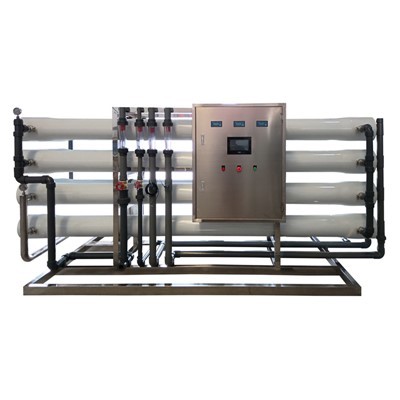
If you’re looking to replace your BWRO membranes, or just want to chat about what your specific setup will cost, we’re here to help. No hidden fees, no confusing quotes—we’ll walk you through what you need, answer questions about maintenance, and make sure you don’t end up paying for more than you have to. Reach out to us to talk through your BWRO system, whether it’s a small unit for a farm or a big industrial setup for a manufacturing plant.
RO Purified Water Equipment References:
- American Water Works Association. (2021). Reverse Osmosis Membrane Lifespan and Maintenance Guidelines. AWWA Press.
- Global Water Intelligence. (2022). Brackish Water Reverse Osmosis Membrane Market Report: Cost and Performance Trends. GWI Publications.
- World Health Organization. (2020). Guidance on Reverse Osmosis System Operations for Small Water Supplies. WHO Press.
- Membrane Technology and Research, Inc. (2023). BWRO Membrane Performance and Replacement Cost Analysis. MTR Technical Reports.
- U.S. Environmental Protection Agency. (2021). Commercial and Industrial Water Treatment: Membrane Replacement Best Practices. EPA Office of Water.
Shandong Yanuo Environmental Protection Equipment Co., Ltd.
We’re well-known as one of the leading swro & bwro equipment manufacturers and suppliers in China, featured by quality products and good price. Please rest assured to buy bulk swro & bwro equipment made in China here from our factory. Customized orders are welcome.
Address: North Side of the Road, 1,000 Meters West of the Intersection of Fenghuangshan West Road and Provincial Highway S102, Wangfu Subdistrict, Qingzhou City, Weifang City, Shandong Province.
E-mail: ynhb.499973983@gmail.com
WebSite: https://www.zkyaruo.com/
