Hey there! If you’ve ever stared at a pearl ring in a jewelry store and thought, “Wait, pearls aren’t just white—what else is there?” you’re not alone. As someone who’s been in the pearl rings game for over a decade (yep, we’ve shipped thousands of rings to all kinds of customers!), I get that question all the time. Most folks think pearls only come in that classic creamy white, but trust me, the color palette is way bigger than that—and picking the right one for a ring isn’t just about looks, it’s about where the pearl comes from, what it’s made of, and even how it’s grown. Let’s break this down like we chat at a trade show booth (no stuffy textbooks here, promise). Pearl Rings
First, let’s get the basics straight: pearl color isn’t just skin-deep. Unlike, say, a dyed shirt, a pearl’s color comes from two main parts—the nacre (that shiny inner layer that makes a pearl a pearl, not just a rock) and the “overtones” that sit on top of the nacre. The nacre is made of tiny aragonite plates and conchiolin, a protein that binds them together. The thickness of that nacre, plus elements like trace metals and even the type of water the pearl grows in, is what creates all those wild hues. And for rings specifically, we care extra because a ring gets touched, bumped, worn every day—so the nacre’s quality (and how the color is locked in) matters way more than it does for a necklace you only wear on date night.
Let’s start with the classics, because those never go out of style. White pearls are the OG, but even they aren’t all the same. You’ve got the bright, almost snow-white ones you see in high-school graduation jewelry—those are usually freshwater pearls, grown in lakes and rivers across China. Wait, but don’t sleep on off-white or cream pearls, either. We get a lot of customers who want a pearl ring for their engagement band, and a warm cream pearl (think vanilla latte with a little foam) looks way more timeless than a stark white against yellow gold. Fun fact: saltwater white pearls, like Akoya pearls, have that subtle blue or pink overtone that makes them glow, not just look pale. I once had a bride come in, tried on three white pearl rings, and picked the Akoya with the faint pink overtone because it “matched her blush.” No shame in that—we sell that style all the time.
Next up, the showstoppers that make people stop and stare: colored pearls. Let’s start with the most famous non-white ones—black pearls. Wait, hold up, they’re not actually black, right? They’re usually a deep, iridescent silver or charcoal, sometimes with a green or purple overtone. Those are South Sea black pearls (also called Tahitian pearls, since most come from Tahiti) and they’re the priciest pearl we carry, but also the most popular for statement rings. We had a customer last year who bought a black pearl ring for her mom’s 60th birthday—she said her mom hated “basic jewelry” and this one looked like it had a secret. She was right; the way black pearls shift color in light is wild. Also, important note: real black pearls aren’t dyed (well, not usually—we only sell undyed ones, fyi). If you see a super cheap black pearl ring, it’s probably dyed freshwater, so skip it. They fade if you even so much as get soap on them, which is a problem for a ring you wear daily.
Then there are the golden pearls. Oh man, golden South Sea pearls—those are the ones that look like melted honey, or liquid sunlight. They grow in the warm waters of the Philippines and Indonesia, and their color comes from a high concentration of carotenoids, same stuff that makes carrots orange. For rings, a small golden pearl set in white gold is so elegant—we sell a lot of those for anniversary gifts. I once talked a guy out of a bigger golden pearl (which was $2k+) and into a 8mm one for $450, and he came back a month later to say his girlfriend cried when she opened it. Turns out, she loved that it was delicate enough to wear to work and special enough for date night. Pro tip for anyone shopping: golden pearls get darker the longer they’re in the water, so if you want a light golden one, go for a smaller pearl harvested earlier. If you want deep, rich gold, wait for the more mature ones.
Now, the weird and wonderful ones that are less common but so cool. Let’s talk about lavender pearls. Lavender is that soft, muted purple, like a lilac flower or a lavender latte. Most lavender pearls are freshwater pearls, which makes them more affordable than Tahitian or South Sea, and they’re perfect for people who want a colored pearl that’s not too bold. We have a lot of millennial customers who buy lavender pearl rings for themselves—they say it’s a “me” piece, not a gift for someone else. Also, lavender pearls have a pink overtone sometimes, which adds that extra depth. I had a customer who works in a creative field (graphic design, I think?) and she loved that no one else at her office had the same ring. It’s those little unique touches that make pearl rings special, right?
Then there are the “bi-color” pearls, which are exactly what they sound like—two colors in one. Some are pearls that have a white center and a black edge, others have a golden bottom and pink top. These are usually South Sea pearls, and they’re super rare, so we only get a few in every shipment. Last quarter, we had a bi-color pearl ring where one side was soft pink and the other was peachy orange, and it sold in 48 hours. I was kicking myself I didn’t order two, but that’s how it goes with rare stuff. For rings, bi-color pearls are perfect if you want something that’s not too matchy-matchy, but still has a cohesive look. Just make sure the pearl is symmetric—we don’t cut corners here, so all our pearls are round (or near-round, for baroque fans) and the colors are even across the surface.
Wait, can’t forget baroque pearls! A lot of people think pearls have to be perfectly round, but baroque pearls are those irregular, lumpy, one-of-a-kind pearls, and they come in every color under the sun. We sell a lot of baroque pearl rings for people who like a more boho, casual style. A baroque black pearl set in silver is so cool—you don’t see that every day. I once wore a baroque pearl ring to a trade show, and like 10 different customers asked where I got it. They’re a bit more trendy right now, but they’ll never go out of style because no two are alike. That’s the thing about pearls—each one is unique, even the ones that look similar.
Now, let’s get real about something that matters way more for rings than for other pearl jewelry: durability. I know we talked about color, but if you’re buying a ring, you want it to last, right? Freshwater pearls are softer (around 2.5-4 on the Mohs scale, which is about the same as a fingernail) so they scratch easier if you’re typing or washing dishes. Saltwater pearls (Akoya, Tahitian, South Sea) are harder, around 5-6, so they hold up better for daily wear. That’s why a lot of our ring customers opt for saltwater pearls, even if they’re a bit pricier—they don’t have to baby their ring. Also, never wear your pearl ring in the shower or while cleaning—soap and water can dull the nacre over time, no matter what anyone says. We always include a little care card with every ring we ship, and it’s saved so many customers from ruining their pieces.
Wait, are there any other colors I missed? Oh, right—gray pearls! Not the charcoal Tahitian ones, but soft, silvery gray pearls that are almost blue. Those are usually Akoya pearls, and they’re super elegant for a minimalist ring. A thin silver band with a small gray Akoya pearl is perfect for someone who wants to spice up a classic look without going overboard. I have a friend who wears hers every day to work, and it still looks like new after three years. She says it’s her “lucky ring” for big meetings.

Let me wrap this up with a little advice, since I’ve helped so many people pick pearl rings. If you’re buying a ring for yourself, go with what makes you happy—don’t worry about what’s “trendy” this year. If it’s a gift, think about the person’s style: classic = white or cream Akoya, bold = Tahitian black, unique = lavender or bi-color. And if you’re shopping for bulk (like a boutique or a jewelry store), hit us up—we work with small businesses all the time and can get custom orders, too. We’ve got all these colors in stock, and we don’t sell anything that isn’t ethically sourced or high-quality. No fake pearls, no dyed junk, just real pearls that will last.
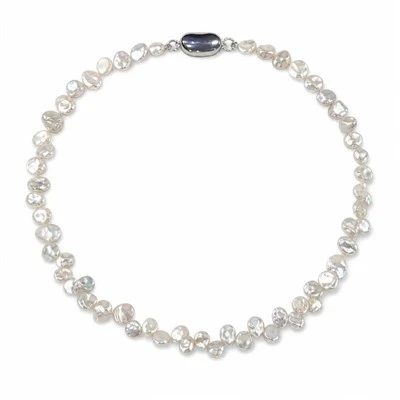
Akoya Pearl Necklace At the end of the day, a pearl ring isn’t just a piece of jewelry—it’s something you’ll wear for years, maybe pass down. The color is part of that story. Whether you want something soft and subtle, bold and bright, or totally one-of-a-kind, there’s a pearl color for you. If you want to chat more about what’s in stock, ask about bulk pricing, or even get a custom ring made, don’t hesitate to reach out. We’re here to help you find the perfect pearl ring that fits your style and your budget.
References
- The Gemological Institute of America (GIA) – Pearl Classification and Color Origins, 2022
- Pearl Jewelry Association – Care and Durability of Pearl Rings for Daily Wear, 2023
- Marine Biologist Reports – Environmental Factors Impacting Saltwater Pearl Color, 2021
Aqvune Pearls Co., Ltd.
Aqvune Pearls Co., Ltd. is one of the most experienced pearl rings manufacturers and suppliers in China, featured by quality products and low price. Please rest assured to buy class pearl rings made in China here and get pricelist from our factory. We also accept customized orders.
Address: 1903-6, Union Building, Lingzhi Street, Yuecheng District, Shaoxing City, Zhejiang Province, China
E-mail: sales@aqvunepearls.com
WebSite: https://www.aqvune-pearls.com/
