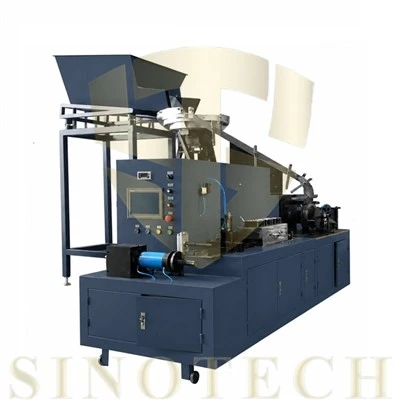
When I first started sourcing nail assembly machines for my own manufacturing line over a decade ago, I assumed industrial equipment of that scale would be the most rigid, immovable setup imaginable. I’d worked with big metal stamping presses and automated packaging lines that required cranes and permanent utility hookups, so the idea of a nail assembly machine that could be tucked into a delivery van felt like a far-off pipe dream. Today, as a nail assembly machine supplier, I get this question every week: Are nail assembly machines portable? The answer isn’t a simple yes or no—it depends entirely on what you need the machine to do, how you plan to use it, and how you define “portable” for your operation. Nail Assembly Machines

Let’s break this down by use case, because that’s where most buyers get tripped up. A lot of folks reaching out to me run small, mobile nail brands—craft makers selling at local farmers’ markets, pop-up boutique events, or even small-scale custom orders they fulfill from a garage. For those, portable nail assembly machines are a game-changer. I designed a line of compact, tabletop models specifically for that segment a few years back, and they’re built to fit into a standard passenger van trunk. Unlike full-scale industrial nail lines that run 10 feet long, weigh over 2,000 pounds, and need 3-phase power, these tabletop units weigh less than 150 pounds, run on 110V household current, and take less than 10 minutes to set up. I’ve had customers take them to craft fairs, pop-ups, and even trade shows, where they demo nail making right at their booth. One of my regulars runs a custom nail business out of her RV, driving around the U.S. and selling at small town events—she brings her tabletop machine inside her RV when she parks, no heavy equipment needed.
But here’s the catch: those compact portable models aren’t for high-volume production. If you’re making 10,000 or more nails a day, you’ll need a mid-scale mobile unit, or a modular line that can be disassembled and moved. Mid-scale portable nail assembly machines weigh between 500 and 1,200 pounds, and require a small forklift for loading and unloading, but they don’t need permanent utilities. Most of these run on either 110V or a portable generator, which I recommend to all my buyers who move their equipment between sites. I’ve supplied these to a lot of contract manufacturers that work with multiple small nail brands—they keep the mid-scale machines on a trailer, and drive it to each client’s facility when they get a big order. That way, they don’t have to pay for a fixed factory space, and they can scale their production based on client demand. A recent customer of mine is a small nail brand that supplies 20 local retail stores; they move their mid-scale machine between a shared warehouse space and their own garage as needed, and it takes about an hour to set up between moves.
Now, what many buyers misunderstand is the difference between “portable” and “mobile industrial.” Full-scale permanent nail assembly lines, the ones that run 50,000 nails or more a day, aren’t portable at all. These machines are welded together in sections, require heavy-duty concrete foundations, and need dedicated 3-phase power, compressed air lines, and sometimes even ventilation systems to operate safely. They’re designed to stay in one facility for 10 to 15 years, and moving one would take a team of specialized riggers, cranes, and utility technicians, plus months of downtime to disassemble, transport, and reassemble. I never recommend trying to move a full-scale line on your own—its heavy metal frame, precision parts, and custom wiring make it too risky for amateur moves. Even for full-scale lines, though, we offer modular components that can be packed and shipped in sections, which makes it easier to expand or reconfigure your permanent facility down the line.
A common concern I hear is about performance when moving equipment. A lot of buyers worry that if you take a nail assembly machine apart and move it, it won’t work as well as it did before. That’s a valid worry, and it’s why all the portable and mid-scale models we build have precision calibration that stays locked in during transport. We test every mobile unit with a vibration-resistant mounting system that keeps the cutting and forming parts aligned, even when it’s being hauled over bumpy roads. For buyers who move their machines frequently, we offer annual calibration checks to make sure all the parts are still aligned—most of them only need a minor tweak once or twice a year, which is way less than the calibration required for a full-scale permanent line. I had a customer who moved his mid-scale machine every two months for a year, and he told me the only time he had an issue was when he skipped the calibration check for six months, which caused a slight misalignment that made a small number of nails come out with bent tips. That’s a easy fix, though, and with regular checks, you’ll get the same consistent performance as a permanent line.
Another big factor in portability is maintenance. Portable nail assembly machines are designed with easier access to parts, which makes it simpler to do routine maintenance on the go. The tabletop models, for example, have removable panels that let you clean the forming dies and replace worn parts without taking the whole machine apart. That’s a huge benefit for mobile operators, who might not have access to a full maintenance shop wherever they’re working. Mid-scale units also have tool-less access to most components, so you can swap out a worn die or clean a filter in 15 minutes, no specialized tools needed. Full-scale permanent lines, on the other hand, require a dedicated maintenance tech and specialized tools, so they’re much harder to service on the move. I’ve had customers who buy portable machines specifically because they don’t want the hassle of scheduling maintenance for a big permanent line—they can do small fixes on their own, or call a local tech when they’re at a permanent site.
Of course, there are limits to what a portable nail assembly machine can do. If you’re making specialty nails—like roofing nails, finishing nails, or brads that require specific coatings or custom sizes—portable models can handle most of that, but some very small or very large specialty nails might not fit in the compact units. Our tabletop models have a range of die sizes, so you can adjust them to make standard and medium specialty nails, but if you’re making micro brads for furniture or extra-large roofing nails, you’ll need a mid-scale or permanent line. I always tell buyers to be clear about their product specifications before they decide on a machine—we can test any of our portable units with sample materials to make sure they can produce the nails you need.
I also get a lot of questions about cost, which is a big part of why buyers choose portable machines. Portable nail assembly machines cost a fraction of full-scale permanent lines. A tabletop portable unit starts at around $5,000, which is way more affordable for small brands just starting out. Mid-scale portable units start at $25,000, still a fraction of the $100,000+ price tag for a full-scale permanent line. That lower upfront cost makes it possible for small brands to launch without taking on big debt, and many of our customers use their portable machines to grow their business before they invest in a permanent line. One of my first customers, a woman who started making custom nail art for local salons, used a tabletop machine for two years, then expanded to a mid-scale unit, and last year invested in a small permanent line for her new factory space. That growth trajectory is exactly why I designed portable machines in the first place—they let small businesses scale without being tied down to a big facility.
I should also mention safety, which is a top priority for all our machines. Portable nail assembly machines have safety guards that are easy to remove for maintenance, but lock into place during operation, and most have emergency stop buttons that are within arm’s reach. Since mobile operators often work in small spaces, our compact units have small footprints that leave plenty of room for workers to move around, no matter if they’re working in a garage, a pop-up booth, or an RV. Full-scale lines have more extensive safety systems, like interlocks that shut down the machine if the guard is open, but they’re bulkier and harder to navigate in small spaces, which is another reason portable models are popular for small-scale operations.
All that said, the most important thing when choosing a nail assembly machine is to align it with your business needs. If you’re a small craft maker or a contract manufacturer that moves between sites, a portable machine is absolutely worth the investment. If you’re a high-volume brand with a permanent facility, a modular line that can be reconfigured as needed is a better fit. I’ve seen too many buyers buy a portable machine thinking it can replace a full-scale line, and end up disappointed when they can’t hit their production goals—and too many big brands refuse to consider portable machines because they don’t realize how much they can grow with a compact unit.
At the end of the day, “portable” doesn’t mean “less capable.” It means flexible. For the nail brands I work with, flexibility is everything—whether that’s moving a machine to a pop-up event, scaling production to meet a new client order, or launching a new line of custom nails. If you’re curious about what a portable nail assembly machine can do for your business, feel free to reach out to discuss your specific needs. We can walk you through the different models, run test runs with your nail samples, and help you find the right setup that fits your production goals and budget.
Mesh Processing Line References:
- Industrial Automation Association. (2022). Portable and Modular Equipment for Small-Scale Manufacturing.
- Global Nail Industry Report. (2023). Equipment Trends for Small and Medium-Sized Nail Producers.
- Occupational Safety and Health Administration (OSHA). (2021). Safety Guidelines for Portable Manufacturing Equipment.
- Manufacturing Extension Partnership (MEP). (2022). Scaling Small Businesses with Modular Machinery.
Sinotech Fasteners Industry Co., Ltd.
With abundant experience, we are one of the most professional nail assembly machines manufacturers in China. Please feel free to buy customized nail assembly machines at competitive price from our factory. Welcome to contact us for quotation.
Address: No. 7, North of Bantang Avenue, Huashan Industrial Park, Chaohu Economic Development Zone, Hefei City, Anhui Province, China
E-mail: ryan@sinotechfasteners.com
WebSite: https://www.sinotech-fasteners.com/
