Hey there, and welcome to my little corner of the industrial supply world—so glad you’re here. If you’ve ever spent 20 minutes fighting with a tube fitting, trying to thread it by hand, wrestling wrenches, and ending up with a leak that makes you want to pull your hair out, you’re not alone. I run a company that makes metal push-in fittings, and let me tell you, that frustration is exactly why we do what we do. Today, I’m breaking down how these little workhorses actually work—no fancy engineering degree required, promise. Metal Push-In Fittings
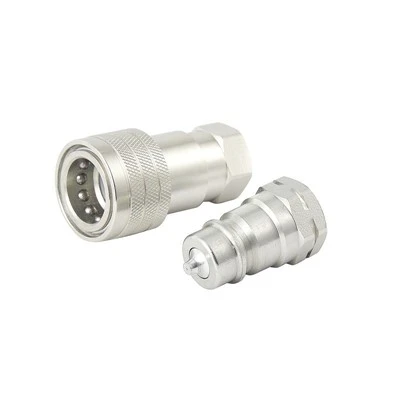
First, let’s cut through the jargon. Metal push-in fittings (sometimes called push-to-connect fittings, but I like the metal part there because plastic ones have their place, but metal is where the real durability lives) are basically the connective tissue of pneumatic systems, hydraulic setups, even some water lines for industrial gear. Unlike old-school compression fittings that need you to tighten a nut, trim a tube to exact length, and cross your fingers you didn’t scratch the tube’s outside, these things are about as simple as plugging in a USB drive—except way less likely to fail when you need them.
But how do they pull that off? Let’s dive into the inside of one, because that’s where the magic lives. Take any standard brass (we use brass for most of our because it’s corrosion-resistant and strong enough for most jobs) push-in elbow or straight-through fitting you’ll see on a CNC machine or a warehouse conveyor. The end where the tube goes in isn’t just a hollow hole. There are three key parts inside that do all the work: a collet, an O-ring, and a release collar. That’s it—three parts, and they work together like a well-oiled team.
Let’s start with the tube itself, because you can’t just push any random plastic tube into these. You need a rigid, thermoplastic tube—usually nylon, polyurethane, or polyethylene. The tube’s outside diameter (OD) has to be a perfect match to the fitting’s inner socket. Too big, and it won’t slide in; too small, and it’ll leak. Now, when you push the tube into the fitting, the first thing it hits is the collet. The collet is that little ring with serrated teeth on the inside, right? Those teeth aren’t sharp enough to cut the tube—don’t worry, we design them so they only grip, not puncture. Wait, but how does the collet know when to stop gripping? Because as you push the tube, the collet’s outside is tapered to match the fitting’s inner wall. So as the tube moves past the collet, the teeth close slightly around the tube, creating a mechanical lock. That’s the first part of the seal.
Next up is the O-ring, which sits a little further back in the socket, past the collet. Once the tube is all the way in, it presses against the O-ring, which is made of Buna-N or EPDM depending on what fluid you’re using. Buna-N is standard for pneumatics and oils, EPDM if you’re dealing with water or more corrosive stuff. The O-ring compresses just enough to create a tight, fluid-tight seal between the tube and the fitting’s inner surface. No gaps, no leaks—simple as that. Wait, but why metal fittings over plastic here? Let’s be real: plastic fittings can crack if you drop them, or get brittle in extreme cold, or can’t handle higher pressure. Our metal ones are built to withstand temps from -40°F to 200°F, and pressures up to 230 PSI—way more than your average plastic push-in. That’s why they’re the go-to for heavy-duty industrial jobs.
Now, what about disconnecting? Because you can’t just yank the tube out—if you tried, you’d probably scratch the tube and ruin the fitting. That’s where the release collar comes in. It’s the ring you squeeze with your thumb or a flathead screwdriver (we make sure it’s easy to get to, even in tight spaces) that pushes the collet’s teeth outward. Once the teeth release their grip on the tube, you can just pull it out. No tools needed most of the time, which is a huge time-saver when you’re doing maintenance.
Let me throw a real-world example at you to make this make sense. Last month, we had a customer who runs a packaging plant. Their old compression fittings were causing so many leaks they were wasting 150 feet of compressed air a week. That’s not just annoying—it’s expensive. They switched to our metal push-in fittings, and overnight, their air waste dropped by 90%. The maintenance guy told me he used to spend an hour a day changing out bad fittings; now he does it in 5 minutes flat. That’s the kind of difference these things make.
Wait, but there are some mistakes people make with push-in fittings, right? Let’s talk about that because I don’t want you to run into issues. First, always make sure the tube is cut square. If the end is angled, it’ll catch on the collet’s teeth when you push it in, and you might not get a full seal. Second, don’t reuse tubes or fittings. Yeah, you can pull a tube out once, but if you push it back in, the collet’s teeth won’t grip as well, and the O-ring might be compressed wrong. Third, check the size match. If you have a 10mm OD tube, don’t force it into a 8mm fitting. I’ve seen people do that, and it’s a fast way to ruin both the tube and the fitting.
Another thing: our metal push-in fittings are all tested, obviously. We pressure-test every batch, make sure the collet’s teeth are spaced right so they don’t slip, and the O-rings are sized perfectly for their sockets. A lot of cheaper suppliers cut corners on the O-ring—use a thin one, and it’ll blow out under pressure. We use thick, durable O-rings that hold up even with repeated connect-disconnect cycles. How many times can you disconnect and reconnect? We test ours to 1,000 cycles before the seal starts to weaken. That’s way more than most plastic fittings can handle.
Wait, what about different types of metal? We make our main line from brass, but we also have stainless steel push-in fittings for more corrosive environments—like food and beverage plants, or chemical processing. Stainless steel is non-magnetic, easy to clean, and won’t rust, so that’s perfect for those jobs. A lot of people don’t know that, so I always mention it when I talk to customers because one size doesn’t fit all.
Let me back up a second to explain why push-in fittings even took over from compression ones. Compression fittings have been around forever, right? You have to cut the tube, slide on the nut, slip on the compression ring, thread the nut onto the fitting, and tighten it with a wrench. If you over-tighten, you crack the tube or break the fitting. If you under-tighten, it leaks. Push-in fittings eliminate all that. You just cut the tube square, push it in until you hear that little click— that’s the collet locking in—and you’re done. No tools, no guesswork. That’s why they’re so popular now.
But metal vs plastic: I get why someone might go plastic for a small home project or a low-pressure setup. Plastic is cheaper, lighter. But for industrial use, where downtime costs money, metal is the way to go. Our metal fittings can handle vibration from conveyor belts, heat from factory floors, and the occasional accidental drop off a workbench. Plastic ones would crack or leak the first time you drop them, trust me.
I also want to talk about the little details we build into our fittings that most suppliers skip. For example, our collet has 12 teeth, not 8 like some cheaper brands. More teeth mean a more even grip on the tube, so less chance of it slipping under pressure. The release collar is spring-loaded, so it pops back into place after you squeeze it, which means you don’t have to hold it the whole time while you insert the tube. We also make the socket slightly rounded at the entrance, so the tube slides in easily without catching. Small things, but they add up to a way better user experience.
Let’s get back to how it works, just to recap so it sticks. Step 1: Get your rigid tube, cut it perfectly square. Step 2: Line it up with the fitting’s socket. Step 3: Push firmly until you hear the click. That click is the collet’s teeth locking around the tube. Now, to test it, give the tube a gentle tug—if it doesn’t move, you’re good. For disconnect, squeeze the release collar, pull the tube out. That’s it. No mess, no tools, no fuss.
Now, I know some of you might be wondering: are metal push-in fittings expensive? Yeah, they’re a little more upfront than plastic, but the savings in downtime, repair parts, and wasted air or fluid add up fast. That packaging plant I mentioned earlier? They calculated they saved $2,000 a month on air costs after switching. That pays for the fittings in no time.
I’ve been doing this for 12 years now, and one of the most common questions I get is “do these really not leak?” The answer is, if you install them right, they almost never leak. The key is that the mechanical lock (from the collet) and the static seal (from the O-ring) work together, not one or the other. Old compression fittings rely on just the nut tightening the compression ring to seal, which can loosen over time with vibration. Push-in fittings don’t have that problem because the collet locks mechanically, so the tube can’t move, and the O-ring stays compressed the whole time.
Wait, let’s talk about vibration specifically. Factory floors are shaking all day long—conveyors, pumps, CNC machines. Compression fittings will slowly work loose over time, leading to leaks. Our metal push-in fittings’ collet is designed to resist that vibration, so the tube stays put. We’ve had customers tell us they haven’t had a leak in their system for years after switching. That’s the peace of mind we want to give people.
Another use case: automation. Robotic arms use a ton of pneumatic lines, and they’re always moving, flexing the tubes. Push-in fittings handle that flex way better than compression ones, because the connection is tight but not rigid. The tube can move a little without coming loose, which is perfect for robots that repeat the same motion thousands of times a day.
I should also mention that we sell fittings for all common tube sizes—from 4mm up to 16mm OD, and different thread types too: NPT, BSP, metric. No matter what your system is set up for, we’ve got a fitting that’ll work.
Now, I know this is a lot, but I’m gonna wrap this up by saying: if you’re tired of fighting with your old tube fittings, if downtime is costing you money, or if you just want a system that’s easy to maintain, metal push-in fittings are the way to go. We build ours to last, we test every single batch, and we know how important it is to have a connection that works when you need it.

If you’re curious about pricing, want to ask about size compatibility, or just need help picking the right fitting for your setup, don’t hesitate to reach out. We don’t do a one-size-fits-all approach, so we’ll help you figure out exactly what you need, no pressure, no sales gimmicks.
Mini Pneumatic Quick Couplings References:
- Industrial Fluid Systems Association. Push-to-Connect Fitting Design and Application Guidelines. 2021.
- Brass Development Association. Corrosion Resistance of Brass Fittings for Pneumatic Applications. 2020.
- Polymeric Tube Manufacturers Association. Rigid Tube Specifications for Push-In Fittings. 2022.
Cixi Poolke Hydraulic Pneumatic Co., Ltd.
Cixi Poolke Hydraulic Pneumatic Co., Ltd. is one of the most professional metal push-in fittings manufacturers and suppliers in China, also supports customized service. Please feel free to wholesale the newest metal push-in fittings made in China here from our factory. Quality products and reasonable price are available.
Address: #88 Zhengtong Road, Kandun Industrial Park315303, Cixi, Zhejiang, China
E-mail: contact@poolke.com
WebSite: https://www.poolkecouplings.com/
