If you’ve ordered a coffee from a local café, picked up a prescription from a pharmacy, or grabbed a snack from a convenience store lately, you’ve probably seen those little boxy delivery robots zipping around sidewalks, dodging pedestrians, and pausing to let bikes pass. For years, people wrote them off as a gimmick—cute, sure, but only good for college campuses or downtown office parks where no one’s in a rush. But as a supplier of multi-scenario delivery robots, I’m here to tell you those limits have been blown out of the water. These bots aren’t just for one niche anymore; they’re showing up in places you’d never expect, and businesses are finally waking up to how much they can streamline operations, cut costs, and keep customers happy across almost every part of daily life. Multi-scenario Delivery Robot
Let’s start with the spaces where you already see them: urban residential neighborhoods. A few years back, most delivery bots were stuck on corporate campuses or closed university grounds, where sidewalks were predictable and traffic was light. Now, we’ve fine-tuned our robots to handle the chaos of actual city streets—potholes, crosswalks with traffic lights, even that random kid chasing a ball into the street. Last year, we deployed a fleet of 50 of our bots in a medium-sized city in the Pacific Northwest, working with a local grocery chain to drop off orders between 9 a.m. and 9 p.m. No more waiting around for delivery drivers to finish their routes, no more missed deliveries because a customer wasn’t home. The bots can lock themselves to a porch with a digital lock, send a text when they’re 10 minutes away, and even handle heavy orders—up to 50 pounds, which is more than enough for a week of groceries, a case of water, or a bag of dog food. The residential market’s shifted fast because people want convenience that doesn’t cost an arm and a leg; same-day delivery is great, but same-day delivery that’s cheaper than a Uber Eats order? That’s where these bots win.
Next up, hospitals and healthcare facilities. This one’s a big one, and it’s way more high-stakes than dropping off a burrito. Hospitals have non-negotiable rules: no cross-contamination, strict timelines for medication, lab samples, and even sterile supplies for operating rooms. Before our bots, hospital staff were spending hours a week running back and forth between the pharmacy, labs, and patient rooms—time they should be spending with patients. We’ve built our bots to handle that specific environment: they’re sealed to keep germs out, have temperature-controlled compartments for insulin or cold lab samples, and can navigate tight hallways, elevator banks, and even operating room suites without getting in the way of wheelchairs or emergency teams. One of our longest-term clients is a children’s hospital in the Midwest; they now use our bots to deliver snack packs to kids’ rooms, transfer blood samples to the lab in under 15 minutes, and even bring replacement pillows and blankets to families in the waiting area. The best part? No human contact needed, which was a huge win during the peak of the pandemic, when hospitals needed to minimize exposure for both staff and patients.
Then there’s the last-mile and mid-mile delivery gap for e-commerce and retail. Wait, what’s mid-mile? That’s the part between a warehouse and a local store, or between a distribution center and a pickup point. For years, that part of the supply chain was plagued by delays, high fuel costs, and driver shortages. Our multi-scenario bots aren’t just for end customers—they can move cargo between locations too. For example, a big electronics retailer uses our bots to transport pallets of phones and laptops from their regional warehouse to 12 local stores in a rural area where driver turnover is through the roof. The bots travel on pre-approved rural roads, handle gravel and dirt paths, and can make the trip in half the time it takes a delivery truck, because they don’t have to deal with traffic jams in small towns. We’ve also tweaked them to work in retail parking lots, shuttling online orders from the back of the store to curbside pickup spots—no more drivers circling the lot for 20 minutes looking for a spot, no more customers waiting by their cars with no idea when their order will arrive.
Don’t sleep on tourist destinations either. Think national parks, beach towns, and amusement parks—places where traditional delivery services fall flat. If you’re at a Disney park and need a snow cone, or at a mountain resort and want a bottle of sunscreen delivered to your cabin, who’s gonna do that? Not a human driver who has to park and walk across 10 acres of trails. That’s where our bots shine. We’ve deployed our bots at a popular beach resort in Florida, where they deliver cold drinks, towels, and sunscreen to guests staying in beachside bungalows. They navigate sandy paths, avoid umbrella stands, and even stop to let seagulls walk by (we programmed them for that—no need for constant panic alerts every time a bird gets too close). At a national park in Colorado, our bots carry trail mix, water, and first-aid kits to hikers who can’t be bothered to carry extra weight on their trek. Tourist spots are perfect because they have consistent foot traffic, but they’re also hard to navigate for big trucks or even delivery vans, so small, nimble bots fill that gap.
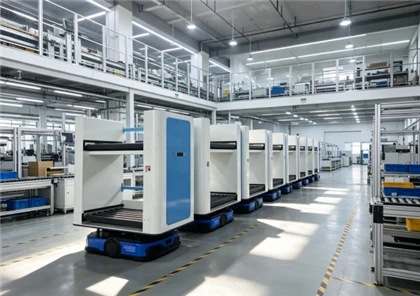
Another underrated scenario: industrial parks and manufacturing facilities. These places have their own unique challenges—wide open halls, heavy machinery, strict access control, and a need to move parts and supplies between different buildings without disrupting production. Before our bots, factory workers had to pause their assembly lines to fetch a specific tool or a batch of materials, which cost the company thousands of dollars a day in lost productivity. Our bots can be programmed to only access certain areas with key card authentication, carry up to 100 pounds of parts, and move safely around forklifts and other heavy equipment. One car parts manufacturer in Detroit uses our bots to deliver engine components from their storage warehouse to their assembly line every 45 minutes, which has cut their wait time for supplies by 70% and reduced the number of human errors in part delivery by 90%. It’s not just about convenience here; it’s about keeping operations running smoothly and efficiently, which is make-or-break for factories.
Let’s not forget about construction sites, surprisingly. Construction sites are messy: uneven ground, dirt, debris, trucks coming and going, and strict safety rules that limit who can be on site at certain times. Moving small tools, extra hard hats, or even portable restroom supplies between different parts of a site can be a hassle, especially after hours when most workers have gone home. Our bots are built to handle rough terrain—dirt, gravel, even small piles of construction waste—and have a built-in alarm system that alerts the site’s security if someone gets too close, which helps keep the site safe after hours. A mid-sized construction company in Texas uses our bots to move tools and materials between their main office trailer and different building floors, so their workers don’t have to make multiple trips back and forth. They’ve also started using the bots to carry water and snacks to workers on hot days, which has improved morale and cut down on time lost for breaks.
Now, I know what some people are thinking: “Are these bots really reliable? Won’t they break down in bad weather?” Fair question. We didn’t build our robots to only work on sunny days. They’re weather-sealed, so they can handle rain, snow, and even extreme heat (we’ve tested them in 100-degree weather in Arizona and they still run fine). They have redundant sensors, so if one camera or laser gets blocked, another takes over, and they’re programmed to slow down or stop if conditions get too bad, like a heavy snowstorm. We also have a 24/7 support team that monitors every bot in our fleet, so if something goes wrong, we can remotely fix it or send a tech to assist within a few hours. For businesses, that peace of mind is huge—no more worrying about a bot getting stuck halfway through a delivery and leaving a customer hanging.
The biggest shift we’ve seen in the last two years is that businesses don’t just want a delivery bot—they want a bot that fits their specific needs. A café doesn’t need the same thing as a hospital, and a construction site doesn’t need the same as a residential neighborhood. Our multi-scenario bots are modular, so you can swap out compartments depending on what you’re delivering: a refrigerated box for food and medicine, a locked compartment for mail or high-value packages, even a flat rack for larger items like laptop chargers or small tools. They also integrate with existing systems, so if you already use a delivery app or a warehouse management tool, the bot can sync with it and automatically pick up and drop off orders without any extra work for your staff. That’s the key—these bots aren’t one-size-fits-all, and that’s why they work in so many different spaces.
At the end of the day, the demand for multi-scenario delivery bots is only going to keep growing. Driver shortages are getting worse, customers want faster, cheaper delivery, and businesses are always looking for ways to cut costs without sacrificing quality. The days of bots only operating on college campuses are long gone—now they’re in neighborhoods, hospitals, factories, tourist spots, even construction sites. If you’re a business owner who’s tired of delivery delays, high labor costs, and unhappy customers, it’s time to stop thinking of delivery bots as a gimmick and start thinking of them as a solution that can work for your specific space.

If you’re interested in learning more about how our multi-scenario delivery robots can fit into your operations, reach out to our team to set up a consultation. We’ll walk you through use cases similar to your industry, show you how the bots work, and help you figure out the right setup for your business. Don’t let outdated ideas about delivery bots hold you back—these are versatile, reliable tools that can transform how you move goods, no matter where you are.
Healthcare Service Robots References
- International Data Corporation. (2023). Global Autonomous Delivery Robot Market Forecast.
- National Institute for Occupational Safety and Health. (2022). Hospital Delivery Automation and Workflow Efficiency.
- Association for Unmanned Vehicle Systems International. (2023). Sidewalk Autonomous Navigation Performance Standards.
- U.S. Census Bureau. (2022). Construction Industry Driver Shortage and Workflow Optimization.
- American Hospital Association. (2023). Healthcare Logistics Cost Reduction via Autonomous Delivery Systems.
Shenzhen Ezhan Technology Co., Ltd.
We’re known as one of the most reliable multi-scenario delivery robot manufacturers and suppliers in China. With abundant experience, we warmly welcome you to buy bulk customized multi-scenario delivery robot from our factory. If you have any enquiry about cooperation, please feel free to email us.
Address: Room 1808, 1809, 1810, Building 2, Aipark, Baolong 4th Road, Longgang District, Shenzhen City
E-mail: sales01@ezhankeji.com
WebSite: https://www.ezhanrobot.com/
