If you’ve ever been behind the wheel of a Mazda, you know they’re built for that perfect balance of sporty handling and a smooth ride—something we’ve gotten really good at as a chassis and suspension supplier for Ford, GMC, and Mazda. But let’s be real: even the most reliable cars develop weird noises over time, and nothing’s more frustrating than that clunking or creaking coming from the suspension, specifically the strut mount area. As someone who’s worked with strut mounts for years, I’ve fielded hundreds of questions from technicians and DIYers asking, “Why is my Mazda making that noise from the top of the strut?” Today, I’m breaking down the most common, science-backed causes of strut mount noise in Mazdas, straight from the shop floor. For Ford GMC Mazda Chassis and Suspension Systems
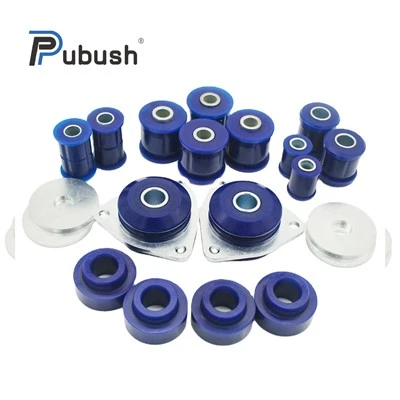
First, let’s get clear on what a strut mount actually does, because that’s the foundation. The strut mount sits at the top of the suspension strut, connecting it to the vehicle’s body or frame. It’s not just a bolted joint—this little part does three critical jobs: it lets the strut pivot when you turn the steering wheel (super important for smooth steering), it absorbs the up-and-down movement of the suspension over bumps, and it helps dampen road noise and vibration so the ride doesn’t feel harsh. No wonder when that part fails or wears out, you notice it immediately.
The first and most common culprit I see is worn rubber in the strut mount. The rubber is the silent hero here—it’s what cushions the strut’s metal components from clanking against the body. Over time, though, that rubber hardens, cracks, or compresses. Think about it: every time you hit a pothole, every time you turn, that rubber gets stretched and squished. In Mazdas, especially models that are driven a lot on rough roads, that rubber can go bad in as little as 60,000 to 80,000 miles. I once had a Mazda 3 come in with a loud clunk over speed bumps—when we pulled the strut mount, the rubber was completely split along the edge; there was no cushion left at all. When the rubber fails, the metal parts of the strut mount (like the bearing or the housing) start banging against the body, and that’s that signature noise.
Next up, worn strut mount bearings. The bearing is the ring-shaped part inside the strut mount that lets the strut pivot smoothly when you steer. It’s usually made of plastic or synthetic rubber, and it’s lubricated with a thin layer of grease inside the mount. Over time, that grease can dry out, especially in extreme hot or cold weather. If you live in a place where winters are freezing or summers get over 90 degrees, that grease breaks down fast. Once the bearing has no lube, it starts to squeak or creak when you turn the steering wheel—like that sound you hear when you turn the wheel while the car’s parked. I’ve seen this happen in Mazda CX-5s a lot; it’s not a super loud noise, but it’s persistent, and if you ignore it, the bearing can start to grind, leading to worse handling. Another common issue here is contamination: dirt, water, or road grime can get past the seal on the strut mount and get on the bearing. That’s like putting sand in a ball joint—it wears the bearing out way faster.
Third, loose or damaged strut mount fasteners. This seems simple, but you’d be surprised how often this causes noise. The strut mount is bolted to the body with several nuts and bolts, and those can work loose over time from vibration. On Mazdas, the front strut mounts are usually connected to the strut tower inside the engine bay, and if those bolts loosen, the whole strut moves around slightly. You’ll hear a clunk when you go over bumps or turn sharply, because the loose mount is shifting. I had a technician come to me last month complaining about a Mazda 6 that had clunking that went away when they tightened the top strut bolts—turns out they only checked the bottom strut bolts, which are the more obvious ones. Also, if you’ve recently replaced struts or strut mounts and didn’t torque the fasteners to Mazda’s specific specs (which is around 55 ft-lbs for most models), that’s a surefire way to get noise from loose mounts. Even small gaps between the mount and the body will cause that annoying rattle.
Another cause I don’t see talked about enough is corroded strut mount components, especially if you live in a rust-prone area. Salty roads in winter, for example, get into the engine bay and the strut tower, eating away at the metal parts of the mount. The bearing race, the metal housing, or even the mounting bolts can corrode, causing rough movement instead of smooth. On older Mazdas (like pre-2010 models), the strut mounts are made with thinner metal that’s more susceptible to rust. Corrosion makes the parts stick instead of moving, so when you turn or go over a bump, you get a grinding noise as the corroded parts scrape against each other. I remember a Mazda Protege that came in with a very loud noise we couldn’t figure out until we scraped off rust around the strut mount—there was a layer of rust buildup that was holding the mount in place, so it couldn’t pivot normally.
Wait, also: damaged strut tower itself? That’s a less common, but I’ve seen it. The strut mount sits on top of the strut tower, which is the metal structure inside the car’s body that supports the suspension. If the strut tower is bent or has rust damage (from a previous accident, for example), the strut mount can’t sit flat, leading to uneven pressure on the mount and excessive wear. This is often the root cause of a noise that keeps coming back even after you replace the strut mount. We had a GMC vehicle come in last year where someone had hit a curb hard, bending the strut tower—we had to straighten it before we could install the new strut mount, otherwise it would have worn out in a few weeks.
Now, let’s talk about how to diagnose this, because it’s not just guessing. First, test drive the car: pay attention to when the noise happens. If it’s when you turn the wheel, that’s usually a bearing issue. If it’s when you go over bumps, that’s more likely worn rubber or loose fasteners. You can also do a quick visual check: open the hood, locate the strut towers (they’re the two metal bumps on top of the front struts), wiggle the strut by hand—if there’s more than a tiny bit of play, that’s a sign the mount is worn. A friend of mine who’s a DIY mechanic swears by pushing down on each front corner of the car while listening at the strut tower—if you hear a clunk, that’s definitely the mount.
As a supplier, we’ve seen a lot of customers make the mistake of replacing just the strut without the strut mount. That’s a big no, because if the mount is already worn, the new strut will just put more stress on it, leading to noise again. We always recommend replacing the strut mount when you replace struts, because they’re a matched set. Also, OEM parts aren’t just a marketing thing—for Mazdas, the strut mounts are designed to fit exactly the strut tower, with the right rubber compound and bearing size. Aftermarket parts can sometimes have cheaper rubber that hardens faster, or bearings that wear out sooner, leading to the same noise in a year or two.
Now, if you’re dealing with strut mount noise in your Mazda, don’t ignore it. It’s not just annoying—worn strut mounts can affect your steering and handling, which is a safety thing. If you’re a mechanic needing high-quality strut mounts or a shop looking for a reliable chassis supplier for Ford, GMC, and Mazda parts, reach out to us. We supply durable, OEM-equivalent strut mounts that are tested to handle the rigors of daily driving, so you can fix that noise once and for all without worrying about it coming back.

There you have it—all the main reasons your Mazda is making that strut mount noise, from worn rubber to corrosion. It’s all about how the parts wear over time, and making sure you use the right parts when you replace them. If you have any questions about strut mount components, sourcing parts for your shop, or need help diagnosing the noise, get in touch with our team. We’re here to keep your suspension running smooth.
Sway Bar References
- Chassis Engineering: Suspension Strut Mount Function and Failure Modes, 2022
- Mazda Technical Service Bulletin (TSB) 01-005-20, Strut Mount Noise Diagnosis and Repair, 2020
- Automotive Noise, Vibration, and Harshness (NVH) Handbook, SAE International, 2019
Xingtai Refined Machinery and Auto Accessory Co., Ltd.
Xingtai Refined Machinery and Auto Accessory Co., Ltd. is one of the most professional for ford gmc mazda chassis and suspension systems manufacturers and suppliers in China, featured by quality products and low price. Please rest assured to wholesale durable for ford gmc mazda chassis and suspension systems made in China here from our factory. Customized orders are welcome.
Address: XINGTAI REFINED MACHINERY AND AUTO ACCESSORY CO., LTD507 NORTH TAIHANG ROAD, XINGTAI CITY, HEBEI PROVINCE, PR.
E-mail: Lindy@pubush.com
WebSite: https://www.pubush-suspension.com/
