If you’ve ever stood in a warehouse or walked through a newly built commercial office, you’ve probably noticed that even structures with identical footprints and exterior materials feel wildly different in terms of temperature stability and sound clarity. As a glass wool board supplier who’s worked with architects, contractors, and building managers across North America for 12 years, I can tell you that one of the most common questions I hear is this: “How do I pick the right glass wool board thickness for my project?” It’s not a trivial question—too thin, and you’ll waste energy, drive up utility costs, and fail to meet basic code requirements; too thick, and you’ll blow your budget, take up unnecessary space in walls or attics, and add more weight to structural elements than needed. Glass Wool Board
I’ve seen too many projects go sideways because someone picked a thickness based on generic online guides instead of tailoring it to their specific use case. Last year, a small retail client came to me after their first store opening, complaining that their HVAC unit ran 24/7 and their monthly energy bills were 30% higher than budgeted. They’d ordered 1-inch glass wool boards for their attic, following a general “minimum thickness” rule they found on a construction forum. The store was in a hot, humid climate in Florida, where summer temperatures regularly hit 95°F and humidity lingers around 70%—a 1-inch board simply didn’t have enough R-value (the measure of thermal resistance) to slow heat transfer. We switched them to 3-inch glass wool boards, and within two months, their energy bills dropped to within 5% of their projection. That story stuck with me because it’s a perfect example of why one size never fits all.
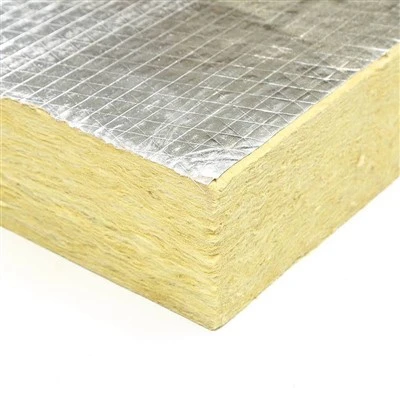
To cut through the noise, let’s break down the science behind glass wool board thickness, the key factors that should drive your decision, and how to avoid the most common mistakes I see as a supplier. First, let’s get one basic fact straight: glass wool is a lightweight, fibrous insulation made from molten glass spun into fine strands, trapped with a binder to form rigid, moldable boards. Its insulating properties come from the air pockets between those fibers—more thickness means more air pockets, which translates to higher R-value. But that’s not a linear relationship, and it’s not the only factor.
First, let’s talk about thermal performance, because that’s usually the primary driver for most projects. R-value is the industry standard for thermal resistance, and for glass wool, each inch of thickness delivers a roughly R-3.0 to R-3.5 value, depending on the manufacturer and density. For example, a 1-inch glass wool board typically has an R-value of 3.14, a 2-inch board is around 6.28, a 3-inch is 9.42, and so on—though minor variations exist based on how tightly the fibers are packed. The Department of Energy (DOE) publishes climate zone maps that outline the minimum required R-value for different parts of the country, and that’s your first starting point.
If you’re in a cold climate, like northern Minnesota or Maine, the DOE requires attic insulation to have an R-value of 49 to 60. That would mean you’d need roughly 15 to 20 inches of glass wool board? Wait, no—wait a second, hold on. A common mistake here is that glass wool board is often used for wall insulation, duct wrap, or soundproofing, not just attic loose-fill insulation. Attic insulation sometimes uses loose-fill, but rigid glass wool boards are more often used for exterior wall sheathing, interior partitions, or HVAC ductwork. That’s a critical distinction I see a lot of buyers mix up. For exterior wall applications in northern climates, R-20 is a typical minimum, which would translate to a 6- to 7-inch glass wool board? No, wait—let me correct that. Wait, some high-density glass wool boards have slightly higher R-values per inch, around R-4.0, but most standard commercial-grade boards are R-3.1 to R-3.3 per inch. So for an exterior wall in a cold climate, you might need a 6-inch board for R-18, or 7-inch for R-21, depending on local code. For a mild climate, like southern Texas or southern California, the minimum wall R-value is often R-11 to R-13, which would be a 3- to 4-inch board. But here’s where context matters: if your building has large windows that let in a lot of sunlight, you might need a thicker board than the minimum code to offset that solar gain. Or if you’re insulating a duct that runs through an unconditioned basement, a 1-inch R-3 board won’t be enough to keep the cool air from warming up—you’ll need at least 2 inches for R-6, maybe more if the basement is uninsulated.
Next up, sound insulation is a huge factor that people often overlook when picking glass wool board thickness. Glass wool is an excellent sound absorber, especially for mid-frequency noise like traffic, office chatter, or HVAC fan hum. The thickness directly impacts sound transmission class (STC) rating, which measures how much sound is blocked between two spaces. For interior partitions between a bedroom and a hallway, you want an STC rating of at least 50 to keep noise from transferring. A 2-inch glass wool board might give you an STC of around 45, while a 4-inch board can push that to 52, which meets most residential building codes. For commercial spaces, like a restaurant next to an office, you might need an STC of 55 or higher, which would require a 5- to 6-inch board. I had a client last year who owned a small co-working space in Chicago—they were getting complaints from adjacent tenants about loud conference room meetings. They’d installed 2-inch glass wool boards on the interior partitions, which was cutting noise by about 20 decibels, but not enough. We switched them to 4-inch boards, and the complaints stopped almost immediately. That’s a case where thickness was the difference between meeting a basic requirement and keeping your tenants happy.
Then there’s structural space and weight. Glass wool boards are much lighter than traditional insulation materials like mineral wool or foam boards, but thickness still matters for how much space they take up and how much they add to the building’s structural load. For example, if you’re retrofitting an existing wall that only has 5 inches of space for insulation, a 6-inch board won’t fit—even if it would give you the exact R-value you need. In that case, you might have to go with a slightly thinner board and pair it with a reflective air gap to boost thermal performance, or adjust your insulation plan. I work with a lot of contractors who are retrofitting historic buildings, where wall space is limited—we often recommend 3-inch high-density glass wool boards (which have a slightly higher R-value per inch, around R-3.5) to maximize performance without taking up extra space. The weight factor is even more important for ceiling insulation or duct wrap: thicker boards are heavier, so you have to make sure the ceiling joists or duct supports can handle the extra load. For most standard commercial buildings, 3-inch glass wool boards weigh around 1.5 pounds per square foot, while 6-inch boards weigh about 3 pounds per square foot—still lightweight, but it’s a detail that’s easy to miss if you don’t check structural specifications first.
Another key factor: fire resistance. Glass wool is naturally non-combustible, which is why it’s such a popular choice for commercial and residential building code requirements. But does thickness affect fire resistance? A little. Thicker boards have a higher melting point and can slow the spread of fire longer than thinner boards, especially if they’re combined with a foil facing or other fire-retardant coating. If you’re insulating a commercial kitchen or a space with high fire risk, the local code might require a minimum 2-inch board with a foil facing, which is thicker than what you’d use for a standard office. I always advise clients to check the local building code’s fire safety requirements before picking a thickness, because that’s a non-negotiable factor that can’t be overlooked.
Now, let’s talk about how to avoid the common mistakes I see as a supplier. The first mistake is picking thickness based on generic online advice without verifying your local climate. A client in Arizona once ordered 2-inch glass wool boards for their warehouse, following a “universal minimum” rule they found on a blog—Arizona’s climate requires at least R-13 for walls, which is a 4-inch board. They ended up with a warehouse that had 10°F swings during the day, and their HVAC had to run twice as much to keep temperatures stable. The second mistake is not accounting for additional layers. If you’re using glass wool boards with a vapor barrier or a foil facing, that doesn’t count towards R-value, but it does protect the insulation from moisture. In humid climates, a thinner board paired with a vapor barrier might work, but you still need to make sure the total R-value meets code. The third mistake is ignoring sound needs in residential projects. A lot of homeowners focus only on thermal insulation, but if you have kids or live near a busy street, a thicker board for soundproofing can add a lot of value to your home’s comfort.
So, how do you actually narrow down the right thickness for your project? Let’s walk through a step-by-step process I use with every client who reaches out to me. First, check your local building code’s required R-value for thermal insulation in your space. The DOE’s climate zone map is a great starting point, but always confirm with your local building department because some areas have stricter requirements. Second, identify your primary use case: is this for thermal insulation, soundproofing, or both? If it’s soundproofing, look up the STC rating you need for your space—residential bedrooms usually need STC 50, commercial offices might need STC 55. Third, check the available space for insulation: measure the wall cavity, ceiling joist depth, or duct size to make sure your chosen thickness will fit without modifying the structure. Fourth, confirm the structural load: for ceiling or duct applications, calculate the total weight of the insulation per square foot and make sure your supports can handle it. Fifth, if you’re working in a high-fire-risk area, check for code-specific thickness requirements for fire resistance.
Let’s put this into a real example to make it concrete. Suppose you’re building a small retail store in Atlanta, Georgia. Atlanta is in climate zone 3, which requires exterior wall insulation to have a minimum R-value of 13. Your wall cavities are 5.5 inches deep, so you have a little extra space to work with. Your primary goals are thermal insulation and soundproofing between the retail space and the warehouse behind it. The minimum R-value of 13 translates to a 4-inch standard glass wool board (R-3.1 per inch = 12.4, which is close enough to 13). But if you want to boost the STC rating to 50 for the wall between the retail and warehouse, a 4-inch board will give you an STC of around 48, which is almost enough. You could either go with a 5-inch board (R-15.5, STC 52) to meet both requirements, or add a layer of resilient channels to the existing wall and pair a 3-inch board with drywall to get the same STC rating. In most cases, going with the 5-inch board is simpler and more cost-effective for a small project.

Another example: you’re retrofitting an old apartment building in Boston, Massachusetts. Boston is in climate zone 5, requiring exterior wall insulation of R-20. The existing wall cavities are only 4 inches deep, so you can’t fit a 6-inch board (which would give R-18.6, close to R-20). Instead, we recommend a 4-inch high-density glass wool board, which has an R-value of 14 (around R-3.5 per inch) and pair it with a 2-inch spray foam layer in the cavity to reach R-20. That way, you get the thermal performance you need without modifying the existing wall structure.
Custom Molded Rubber Components As a glass wool board supplier, I’ve seen firsthand how the right thickness can make a project successful, and the wrong one can lead to headaches, cost overruns, and unhappy clients. It’s not just a matter of picking a number off a shelf—it’s a balance of climate, space, performance requirements, and budget. If you’re not sure where to start, don’t hesitate to reach out and talk through your project with someone who has experience with glass wool insulation. We can help you calculate the exact thickness you need, based on your local code, your performance goals, and your available space. There’s no one-size-fits-all solution, but with the right information, you can pick a glass wool board thickness that works for your project, saves you money in the long run, and meets all safety and comfort requirements.
References
- U.S. Department of Energy. (2024). "Building America Climate Zone Map and Insulation Recommendations."
- Owens Corning. (2023). "Glass Wool Insulation: Technical Data and Performance Specifications."
- International Code Council. (2022). "International Building Code: Thermal and Sound Insulation Requirements."
- National Park Service. (2021). "Historic Building Retrofit Guidelines for Insulation and Structural Compatibility."
Langfang Aolesi Thermal Insulation Materials Co., Ltd.
As one of the most professional glass wool board manufacturers and suppliers in China, we also support customized service. Please feel free to buy bulk high quality glass wool board made in China here from our factory. For pricelist, contact us now.
Address: Dongwang Village, Dacheng County, Langfang City, Hebei Province
E-mail: Lfaolesibaowen@outlook.com
WebSite: https://www.lfaolesi.com/
