Hey there, let’s cut through the jargon for a sec—if you’ve ever watched a crawler excavator dig a foundation, lift a stack of concrete pipes, or clear a plot for a new build, you’ve probably wondered, “How does that heavy beast even move without wheels? And what makes its arm swing and dig like it’s got a mind of its own?” As someone who’s been selling crawler excavators for years (yep, I’m the supplier you’d chat with if you’re hunting for one for your job site), I’ve answered this question a hundred times. Today, I’m breaking down how these machines actually work—no stuffy engineering textbooks, just real, down-to-earth talk. Crawler Excavator
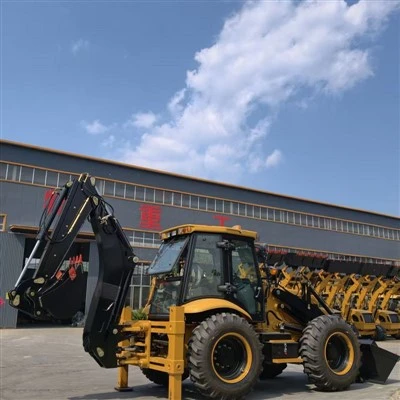
First, let’s start with the basics: a crawler excavator isn’t just a big box with a bucket. It’s three key parts bolted together, and each does a specific job. There’s the undercarriage (the tracks part), the upper structure (the cab and engine area), and the front working end—you know, the arm, boom, dipper, and bucket that do all the digging. But the magic isn’t just the parts themselves—it’s how they talk to each other, and the power that makes every move happen.
Let’s dive into the undercarriage first, because that’s what sets a crawler excavator apart from a wheeled one. Tracks aren’t just for off-road cool points—they spread the machine’s weight way better than tires do. If you’ve ever tried to drive a truck through muddy ground and got stuck, you get why tracks matter. The undercarriage has two main side frames, each with a big sprocket at the back, an idler wheel at the front, and a bunch of smaller roller wheels in between. Wrapped around all those is a rubber or steel track (steel is for heavy-duty jobs like mining or demolition, rubber is gentler on paved sites). Here’s how it moves: the sprocket, which is connected to a hydraulic motor on each side, spins. As it turns, it grabs the inside teeth of the track, pulling it along the idler and rollers. If you want to go forward, both sprockets spin the same direction. Turn? Spin one sprocket faster than the other, or even reverse one—so if the left sprocket spins forward and the right spins backward, the excavator pivots in place, no turning radius needed. That’s why they can work in tight spots like a backyard next to a house—you don’t need a big space to maneuver.
Next up, the upper structure—this is the part that sits on top of the undercarriage, and it’s 360 degrees of rotation, baby. The whole upper section (cab, engine, hydraulic pumps, fuel tank) sits on a big slewing ring, which is basically a giant, heavy-duty bearing with gears. A separate slewing motor (hydraulic, obviously) spins that ring, so the entire upper part—including the working front end—can swing all the way around without moving the tracks. That’s a game-changer. Imagine needing to dig a trench, swing over to dump the dirt in a truck, swing back, repeat. No repositioning the tracks every single time—saves so much time on a job site. The upper structure also houses the heart of the machine: the engine. Most modern crawler excavators use diesel engines (electric ones are catching up, but diesels still dominate for heavy work) that power not just the hydraulics, but also the cooling system, alternator, and all the other little bits that keep it running.
Now, the part everyone cares about: how does that arm dig and lift? That’s all hydraulics. Let’s keep this simple—hydraulics work by using fluid (usually hydraulic oil) to transfer force. You’ve probably seen a hydraulic jack lift a car, right? Same idea, just scaled up for a machine that can lift 10 tons. The engine drives a hydraulic pump that pushes high-pressure oil through hoses and valves to different actuators—those are the cylinders that move the arm parts. Let’s break down the front end: it’s three main hydraulic cylinders, plus the bucket. The boom is the big, long first part of the arm connected to the upper structure. The boom cylinder is attached between the upper structure and the boom—push oil into one side of that cylinder, and the rod extends, lifting the boom up. Push oil into the other side, and it retracts, lowering the boom. Then there’s the dipper (that’s the middle part, between the boom and the bucket), which has its own dipper cylinder. Move that, and the dipper extends or pulls in, so you can dig deeper or pull material toward the machine. Finally, the bucket has its own bucket cylinder—tip it out to dump dirt, curl it in to grab a load.
Here’s where the controls come in, because you can’t just “push oil” manually—though old-timers might have used levers with cables, now it’s all hydraulic joysticks in the cab. When an operator pulls the left joystick forward or back, that sends a signal to the hydraulic valves, which route high-pressure oil to the left or right track motors to move forward or back. Push left joystick left or right, and you turn the tracks. The right joystick? Pull it forward, and that controls the boom cylinder (lift the boom). Pull it back, dipper (curl in to pull material). Push it left or right, that’s the slewing ring—so the upper structure swings. Smaller thumb controls on the joysticks handle the bucket cylinder, so you can curl or dump the bucket without taking your hand off. It’s all synced, so a good operator can dig a trench, lift the bucket, swing over, dump, and swing back in one smooth motion.
Wait, but how does all that oil not get too hot? Or how does the machine know how much force to use? Let’s add a few more key bits. The hydraulic system has a reservoir for the oil, a filter to keep it clean (dirty oil is the #1 cause of excavator breakdowns, by the way—another thing I tell customers all the time), a cooler to keep the oil from overheating when you’re working hard all day, and relief valves. Those relief valves are like a pressure safety valve—if you push the bucket into super hard rock, for example, the pressure would build up way too high, so the relief valve opens a little to let oil escape, preventing damage to the cylinders or hoses. That’s why you don’t have to worry about blowing up the machine if you dig a little too hard once.
Let me also clarify a common mix-up: crawler excavators vs. other excavators. A wheeled excavator has tires, so it’s faster on roads, but can’t handle soft ground. A mini excavator is smaller, for residential jobs, but can’t lift as much. Crawler excavators strike that balance—they’re tough enough for heavy construction, mining, demolition, but manageable for big job sites. Their working principle is the same across sizes, too—from a 1-ton mini crawler excavator for backyard tree removal to a 100-ton monster for quarry work. The only differences are the size of the motors, the pressure of the hydraulic system, and how big the cylinders are.
Now, I should mention something important for anyone buying or using these machines: regular maintenance makes this whole system work. That means checking the track tension (too loose, and it slips off; too tight, and it wears out the sprockets fast), changing the hydraulic oil and filter every 500 hours, checking the engine oil, and making sure the joysticks are calibrated. I see so many customers skip maintenance, and then their excavator breaks down mid-job—costing them way more than the small cost of regular checks.
At the end of the day, a crawler excavator’s working principle is all about leverage and hydraulic power, wrapped in a mobile track base that lets you go almost anywhere. It’s not magic, but it feels like it when you see how it moves tons of material like it’s nothing. If you’re in the market for a crawler excavator—whether you’re a small contractor who needs a 10-ton model for road work, or a big mining company needing a 50-ton workhorse—let’s chat. I’ll walk you through the differences between steel and rubber tracks, explain what hydraulic pressure means for your job, and make sure you get a machine that fits exactly what you need. No sales pitch, just straight talk about what works for your job site.
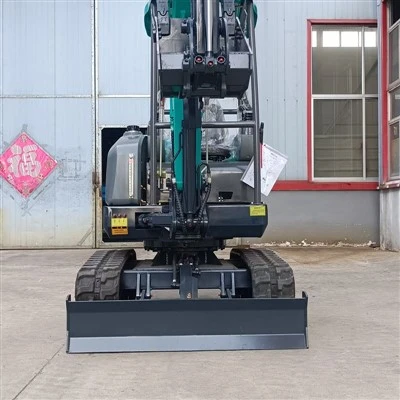
When you’re picking a crawler excavator, remember: the best one isn’t the biggest, it’s the one whose working principle matches the tasks you do every day. Want to talk through what those tasks are? Reach out, and we can figure out the right fit for you.
Slip Loader References:
- Excavator Technology: Hydraulics, Systems, and Operation. Industrial Press, 2021.
- "Crawler Undercarriage Design for Heavy Construction Equipment." Journal of Construction Machinery, vol. 42, no. 3, 2019, pp. 112-128.
- Hydraulic System Fundamentals for Mobile Equipment. SAE International, 2020.
- Mini vs. Full-Size Crawler Excavators: Application and Performance. Equipment Today Magazine, vol. 18, no. 2, 2022, pp. 45-52.
- Maintenance Best Practices for Crawler Excavators. National Contractors Association, 2021.
Shandong Feisite Machinery Co., Ltd.
As one of the most professional crawler excavator manufacturers and suppliers in China, we’re featured by quality products and good service. Please rest assured to buy cheap crawler excavator made in China here and get quotation from our factory. Customized orders are welcome.
Address: 100 meters south of Zengfusi Village, Mihe Town, Qingzhou City, Shandong Province
E-mail: Wpeng19911103@qq.com
WebSite: https://www.shandongfeisite.com/
