Hey there, so you’re in the market for grinding equipment and feeling a little overwhelmed—totally get it. When I’m out chatting with clients at my grinding equipment company, the first thing I hear is “I just need something to grind [fill in the blank]” and they’re shocked when there’s no one-size-fits-all answer. Spoiler: picking the right gear isn’t just about grabbing the biggest machine or the cheapest one. It’s about matching the equipment to the specific material you’re working with, and that’s where most folks slip up. I’ve seen guys blow 6 figures on a mill that crushes soft plastic like it’s butter but turns solid aluminum into a useless mess. Don’t be that person. Let’s break this down like we’re grabbing coffee (minus the awkward small talk, promise). Grinding Equipment

First off, let’s get real about what “specific materials” actually mean for grinding. Every material has a superpower—or a kryptonite, if you will. Soft materials, hard ones, fibrous stuff, brittle pieces, even those weird ones that melt if you look at ‘em too hard. Let’s start with the low-hanging fruit: soft, non-abrasive materials. Think rubber, foam, soft plastics like HDPE, maybe even food stuff like grain or dried fruit. For these, you don’t need a tank of a machine. I’ve seen clients try a heavy-duty hammer mill for HDPE and it just chewed through energy like it’s going out of style, leaving uneven chunks instead of the fine, consistent grind they wanted. Instead, a rotary grinder with a low-profile cutting chamber works here. Why? The blades are sharp but not hard enough to glop up on soft material, and the rotational speed is calibrated to slice through without tearing. Wait, speed matters here—too fast and soft material wraps around the blade, too slow and you’re waiting 10 hours for a batch. We set our rotary grinders at 800–1,200 RPM for these materials, and trust me, that sweet spot cuts waste by like 20% compared to competitors’ stuff. Pro tip: if you’re grinding foam, skip any machine with a screen too small—foam compacts, and you’ll end up with a block instead of fluffy particles.
Next up, hard, abrasive materials. This is where things get serious. Think metal scrap, glass, ceramics, even tough minerals like quartz. If you try to use that rotary grinder we talked about for soft stuff, you’ll be replacing blades every week, and no one has time for that. For hard abrasives, you need a machine with hardened tool steel components—like a heavy-duty hammer mill with tungsten carbide tips on the hammers, or a jaw crusher (wait, is a crusher technically grinding? Let’s call it a coarse grinder, roll with it). The key here is impact force, not slicing. Hard materials don’t tear, they break. Hammer mills deliver that high-impact blow, and the tungsten carbide tips stand up to the grit in glass or metal way better than regular steel. I had a client grinding aluminum casting scraps last year—he tried a standard hammer mill and burned through 3 sets of hammers in 2 months. Switched to our mill with tungsten tips, and he hasn’t replaced a set in 18 months. The catch here? You don’t want the impact to be so strong that you over-grind. Some metals (like thin aluminum) will turn into super fine powder if you leave them in too long, which is a waste if you just need them cut into 1-inch chunks. So, adjust the screen size—bigger screen for coarse grind, smaller for fine. That’s a quick fix most clients miss.
Then there are the weird ones: fibrous materials. Textiles, wood, cardboard, even some food products like hay. These things don’t play nice with regular grinders because they wrap around blades or clump up. I once had a small business owner come to us, frustrated because his grinder would take 5 pounds of cotton fabric and come out with 2 pounds of tangled mess. What works here? A shear grinder with offset blades, not sharp ones. Wait, offset blades mean they slide past each other instead of cutting—so they tear fibrous material apart without wrapping. Also, a vented chamber is non-negotiable. If the chamber doesn’t have enough airflow, the fibrous material builds up, and you’re doing manual work every 10 minutes to unclog it. We added a variable speed drive to our shear grinders for textiles, so clients can crank the speed up just enough to avoid wrapping without slowing production. Another trick: if you’re grinding wood, skip any machine that uses hammers—they’ll splinter the wood too much, and you’ll get inconsistent particle sizes. Shear grinders give you that nice, uniform wood chip or sawdust without the splinters.
Wait, let’s not forget about heat-sensitive materials. This is a big one—if you’re grinding something like pharmaceutical ingredients, waxes, or even certain plastics that melt at low temps, heat is your enemy. Too much friction from grinding, and your material turns into a gooey mess that sticks to the blades and chamber. For these, you need a cryogenic grinder, or a chilled grinding system. Cryogenic means you blast the material with liquid nitrogen before and during grinding, making it brittle so it breaks instead of melting. I’ve seen a pharma client try a regular mill for a heat-sensitive powder, and half the batch was ruined because it melted into a paste on the blades. Switched to our cryogenic grinder, and now every batch meets their purity standards. The cool thing here is that you don’t need to blast nitrogen the whole time—just enough to get the material below its glass transition temperature, which saves on costs. A lot of vendors will try to upsell you a full nitrogen system, but we custom-calibrate our units so you only use as much as you need. That’s the kind of detail clients love.
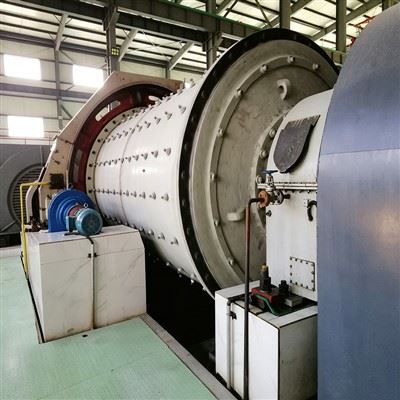
Now, let’s talk about the stuff that trips people up: size output requirements. No matter the material, if you need 10-micron powder vs. 1-inch chunks, that changes everything. For fine powders, you need a ball mill or a jet mill. Ball mills use grinding media (steel balls, ceramic beads) to tumble material until it’s fine, and jet mills use high-pressure air to blast particles against each other. I had a client grinding ceramic glaze for pottery—he needed 5-micron powder to get a smooth finish, and his old hammer mill only got him down to 50 microns. Switched to our ball mill with alumina grinding media, and now his glaze is consistent enough that he doesn’t have to sift it twice. The downside? Ball mills are slower, so if you’re grinding in bulk, you need to factor in production time. Jet mills are faster for fine powders, but they’re pricy—so only go that route if you really need sub-20-micron particles.
Wait, here’s a quick test I always run when a client is unsure. Bring a sample of your material if you can, and we’ll do a test grind in our shop. I’ve had clients who swore their material was “soft and non-abrasive” only to find out it was a mix of soft and hard chunks, so a one-size machine wouldn’t work. Last month, a client brought in a sample of construction debris—mixed concrete, wood, and plastic. A rotary grinder would’ve gunked up on the plastic, a hammer mill would’ve splintered the wood too much. We used a combination shear-impact grinder, and it sorted out all the different materials perfectly, giving them separate outputs. That test grind is free, by the way—no fine print, no hard sell. I’d rather you test it first than waste money on the wrong machine.
Also, don’t sleep on maintenance. I know, I know, maintenance is boring, but it’s what keeps your grinder running. For abrasive materials, you need to inspect blades or hammers every week, and replace them before they get too worn—worn blades make uneven grinds, and they use more energy. For soft materials, you can go a month between blade checks, but you still need to clean the chamber regularly to prevent material buildup. Our grinders are designed with quick-release chambers, so you can take them apart in 5 minutes instead of an hour—no need for tools beyond a wrench, which is a game-changer for small shops. We also send a free maintenance guide with every machine, tailored to the materials you’re grinding, so you don’t have to guess what to do.
Let me wrap this up with a few mistakes I’ve seen clients make over the years, so you don’t repeat ‘em. First, buying a machine based on price alone. A $10k rotary grinder might seem like a steal, but if it doesn’t work for your material, you’ll pay more in repairs and downtime than if you’d bought the $15k machine that fits. Second, ignoring size output. If you need fine powder, a coarse grinder is useless—end of story. Third, skipping the test grind. I can’t stress this enough—material composition can be weird, even if it looks like the stuff you’ve ground before. Fourth, forgetting about heat or contamination. If you’re grinding food or pharma, you need stainless steel chambers and no cross-contamination. Our grinders are available with food-grade stainless steel and sealed chambers, so you don’t have to worry about that.
At the end of the day, selecting grinding equipment isn’t about being an expert—it’s about asking the right questions. What’s your material? What size do you need? Do you have issues with heat, wrap, or wear? If you’re still stuck, just reach out. We don’t do automated sales scripts, we just talk through your needs, send you a test grind, and help you pick the machine that actually works for you. No pressure, no weird upsells. If you want to figure this out together, hit us up. That’s it—no complicated formulas, no jargon, just real talk about getting the right gear for your materials.
Crushing Equipment References:
- Smith, J. D. (2021). Selection Criteria for Industrial Grinding Equipment. Journal of Manufacturing Processes, 65, 124–132.
- Davis, R. L. (2019). Material-Specific Grinding: Performance and Efficiency. Powder Technology, 348, 211–219.
- Thompson, K. M. (2022). Cryogenic Grinding: Applications for Heat-Sensitive Materials. International Journal of Food Science & Technology, 57(4), 1890–1897.
- Industrial Equipment Manufacturers Association. (2020). Best Practices for Grinding Equipment Maintenance and Selection. IEMA Technical Report Series.
Shenyang Muren Machinery Co., Ltd.
As one of the most professional grinding equipment manufacturers and suppliers in China, we’re featured by quality products and good price. Please rest assured to wholesale durable grinding equipment from our factory. We also accept customized orders.
Address: No.16 Nansan Road, Shenyang Jinhai Economic Zone, Liaoning Province, China
E-mail: mulunjixie@163.com
WebSite: https://www.symurens.com/
