Hey everyone, if you’ve ever worked with offshore wind farms, coastal construction, or even marine equipment like fishing trawlers, you know saltwater is basically industrial connector kryptonite. I’m Mike, part of the team at an industrial connector supplier that’s dealt with way too many failed connections from saltwater damage over the years—so today I’m breaking down what actually works, what doesn’t, and how we help our clients avoid those messy, costly shutdowns. Industrial Connector
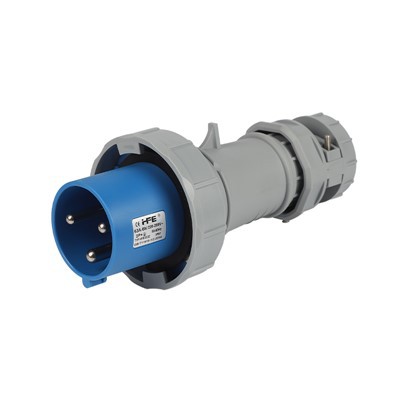
First, let’s cut to the science: saltwater isn’t just “wet.” It’s a super conductive electrolyte mix—think 35 parts per thousand dissolved salts, mostly sodium chloride. When that stuff gets into a connector, it doesn’t just sit there; it triggers two big problems fast. First, galvanic corrosion: dissimilar metals (like the copper in connector pins and steel in housings) act like a tiny battery in the saltwater, speeding up rust and metal breakdown way more than fresh water or humidity ever could. Second, electrolytic oxidation, which eats away at the protective plating on connector contacts—even thin gold plating, that’s supposed to prevent corrosion, gets breached by salt in weeks, not years.
I’ve seen this first hand. A client who runs a coastal crane once came to us because their connector pins were so corroded they couldn’t lift heavy loads during a storm—cost them like $20k in downtime alone. That’s why when people ask, “How do industrial connectors perform in saltwater environments?” the answer isn’t a one-sentence yes or no—it depends entirely on how the connector is built, tested, and installed.
Let’s start with the basics: material specs, because that’s the foundation. The cheapest connectors out there use zinc-plated steel housings and tin-plated pins. Save your money—those might hold up in a garage, but saltwater will turn them to crud in 3-6 months. The good stuff? Housings made of marine-grade materials: 316 stainless steel (way more corrosion-resistant than regular 304), or glass-filled nylon with UV stabilizers (lighter, cheaper, and works great if the connector’s sealed right). For contacts, it’s all about plating. Pure gold plating is top tier, but not just any gold—we use flash gold (like 0.5 microns) for general saltwater use, and thicker gold (2-5 microns) for high-vibration, high-current apps like offshore subsea pumps. Wait, but we also use nickel under-plating on contacts— that blocks the base metal from leaching into saltwater, which is a trick a lot of cheap suppliers skip.
Then there’s sealing—this is non-negotiable for saltwater. A connector might have the best materials in the world, but if there’s a 0.1mm gap between the housing and the boot, saltwater will seep in when waves splash it or it’s submerged. IP ratings are the standard here, but let’s translate that: IP67 means dust-tight and can handle being submerged in 1m of water for 30 minutes—good for splash zones, but not for permanent submersion. IP68 is what you need for offshore wind turbine foundations or underwater ROVs; that’s rated for continuous submersion at specific depths, like 100m or more. Also, don’t sleep on the cable glands: they need to be IP-rated too, and made of the same marine-grade metal as the housing. A bad cable gland is a leak point, plain and simple.
Now, testing—because specs are useless if they don’t hold up in real saltwater. At our company, we don’t just do standard salt spray tests (which are usually 500 hours of exposure). We put our connectors through cyclic saltwater immersion tests too: dunking them in real coastal saltwater for 4 hours, drying them for 20, repeating for 1000+ hours. That mimics the real world way better than a lab salt spray, which is just continuous salt fog. We once had a client say their connector passed a 500-hour salt spray test but failed in 2 months on a dock—turns out the lab test didn’t account for temperature swings (saltwater heats up and cools down, which makes seal gaskets expand and contract, letting tiny amounts of salt in). We add thermal cycling (-40°C to 85°C) to our saltwater tests to fix that.
Wait, but even the best connector will fail if you install it wrong. I’ve seen people tighten cable glands too loose, or forget to torque connector locks to the right specs. For subsea connectors, you need to use anti-seize compound on all metal threads to prevent galling, and silicone grease on gaskets to keep them flexible in cold saltwater. Also, don’t leave connectors unmated for long periods—saltwater can corrode exposed pins way faster than when they’re covered by the mating interface. That’s why offshore workers usually keep spare connectors in sealed plastic bags, not just laying on the deck.
Let’s get specific on real-world performance, because that’s what matters. For example:
- Splash zones (coastal cranes, port machinery): If you use a 316 stainless steel connector with IP67 housing, 2-micron gold-plated contacts, and a nitrile rubber gasket, we’ve had clients run those for 5+ years without issues. One port in Miami has been using our connectors on their container cranes since 2018, and we did a check last year—only minor, almost invisible corrosion on the mating surfaces, no downtime.
- Moderate submersion (up to 10m: dock power units, boat controls): IP68 glass-filled nylon connectors with nickel-gold contacts work great here, cheaper than stainless steel, and they handle the salt and wave splash no problem.
- Deep submersion (offshore wind, subsea ROVs): You need hermetically sealed connectors, usually titanium housing (even more corrosion-resistant than 316 stainless for deep saltwater) and gold-plated contacts. Those are built to handle high pressure too—saltwater compresses, so a regular IP68 connector will leak at 100m because the pressure pushes water through tiny gaps. Our deep submersion connectors are rated for 500m, and we’ve had a wind farm in the North Sea run theirs for 7 years straight.
But here’s the thing: no connector is “saltproof,” just “salt-resistant.” If you’re in an extreme environment—like a fishing trawler that gets hosed down with high-pressure saltwater every day, or an offshore rig that’s hit by salt spray 24/7—you need to do regular maintenance. Every 6 months, wipe down connectors with fresh water, check gaskets for tears, and tighten any loose locks. We send a little maintenance kit with every connector order for that exact reason—no one wants to pay for a new connector when a $5 gasket would’ve fixed it.
Wait, let’s debunk a common myth: “Gold plating is the only way to go.” No, for low-current apps (like sensor connections on a coastal weather station), tin plating works if the connector is sealed right. We have a line of low-cost tin-plated connectors for sensor arrays that only handle 12V, and they’ve lasted 3 years in saltwater with no issues. The catch is, tin is softer than gold, so if there’s vibration (like from wind turbines), it can wear faster. So it’s all about matching the plating to the application, not just buying the most expensive one.
Another myth: “IP ratings are all the same.” Nope, two IP68 connectors can be wildly different. A lot of cheap suppliers label their connector IP68 just because it passed 1m submersion for 30 minutes, but real IP68 for coastal use needs to pass at least 1m for 24 hours, and withstand thermal cycling. We test every batch of connectors we send out, so our clients don’t get that false IP rating garbage.
Now, what about common failure points we see? 9 times out of 10, saltwater-related connector failures aren’t the connector’s fault—they’re installation or maintenance mistakes. Last year, a client in Hawaii had 8 connectors fail on their offshore solar array; we tested them and found they were zinc-plated (not 316 stainless) and the cable glands were tightened too loose, so saltwater seeped through. They switched to our marine-grade connectors, torqued the glands right, and haven’t had a failure since. The other 1% of failures are bad manufacturing: a seal gasket with a tiny hole, or plating that was too thin. We catch those in our testing, so we don’t send them out.
So if you’re working in a salt-heavy environment—coastal, marine, offshore—here’s our advice: don’t cut corners on connectors. Skimping on housing material, plating, or sealing will cost you way more in downtime than the difference in price. Look for connectors with proven saltwater testing (ask suppliers for test data, not just spec sheets), make sure they have the right IP rating for your application, and stick to a maintenance schedule.
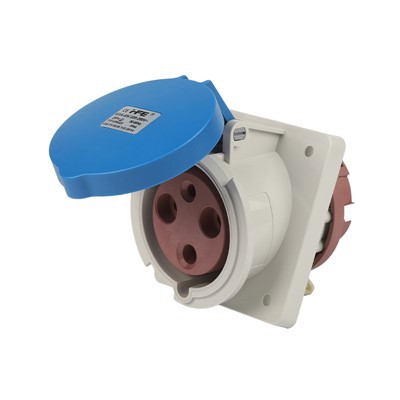
If you’re dealing with saltwater-related connector issues—whether you’re looking to replace failing ones, source new ones, or just want to ask about a specific application—reach out to us to chat. We’ve worked with hundreds of marine and offshore clients, and we can help you pick the right connector to fit your needs, no matter how extreme the salt environment is. Don’t waste money on connectors that’ll rust out in 6 months—let’s talk about what actually works.
Multiple Outlet Socket References:
- ISO 16750-3:2018, Road vehicles – Environmental conditions and testing for electrical and electronic equipment – Part 3: Mechanical loads.
- NACE International Publication SP0775-2018, Standard Practice for Evaluation of Hydrogen Embrittlement in Steels.
- International Electrotechnical Commission (IEC) Standard 60529:2013, Degrees of protection provided by enclosures (IP Code).
- Marine Connector Performance Testing Report, Industrial Connector Manufacturers Association, 2022.
- Corrosion of Metals in Marine Environments, ASTM International Manual Series, 2021.
Zhejiang Hefeng Electric Co., Ltd.
Zhejiang Hefeng Electric Co., Ltd. is one of the most professional industrial connector manufacturers and suppliers in China, featured by quality products and low price. Please rest assured to buy durable industrial connector made in China here from our factory. Also, OEM service is available.
Address: Wenzhou Daqiao Industrail Park, Beibaixiang Town, Yueqing City, Zhejiang Province, China
E-mail: hefengplug@chinahfe.com
WebSite: https://www.hfcee.com/
