Let me cut to the chase—when you run a special parts supplier, nothing hurts more than getting a last-minute panicked call from a customer, saying a custom, one-of-a-kind part that costs them a whole project just got damaged. I’ve been on both sides: spent 10 years fixing parts that clients thought were toast, and standing behind my own company’s supply chain, sweating through rush orders when a CNC-machined titanium bracket or custom injection-molded housing cracks during shipping or installation. Let’s talk real fixes, not some textbook stuff that’s never worked when you’re staring at a broken part that can’t be replaced by off-the-shelf junk. Special Parts
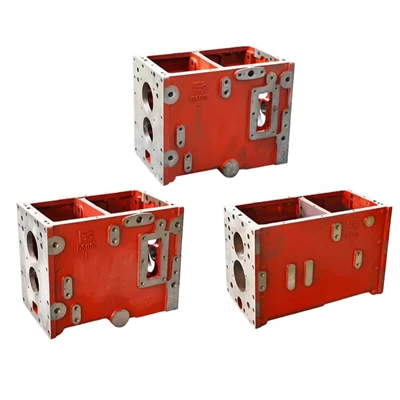
First off, let’s get the basics right because skipping this step is how you turn a $50 repair into a $500 disaster. When that damaged part hits your workbench—whether it’s sent to us, our supplier team, or you in-house—stop and do three things before you even grab a weld gun or epoxy. First, snap photos of the damage in natural light, not that harsh shop overhead that hides tiny hairline cracks. Include wide shots (so you see where the part mounts) and close-ups of the flaw, plus notes on where it failed: was that titanium bracket bent at the bolt hole, or the plastic connector snapped right at the injection gate? Second, write down what it’s for. No, “it’s for Machine X” isn’t enough—tell us if it’s under 200°F heat, if it’s holding 50 psi of pressure, or if it’s in a spot that vibrates 24/7. I can’t tell you how many times a customer tried to fix a part for a cold, low-load spot with epoxy that’s only rated for high heat, and it blew out a month later. Third, confirm if it’s non-structural or structural. That’s huge—gluing a broken plastic label bracket is way different than gluing a gear that spins 10,000 RPM. I once had a client try to epoxy a fractured drive shaft for a conveyor, and yeah, it held for two days before the whole line shut down and cost them $20k in downtime. Oops.
Now, let’s break down the most common special parts we run into, and the fixes that actually work, no fluff. Let’s start with metal parts because those are 90% of the requests we get—custom steel, aluminum, titanium, even those weird superalloys for aerospace or medical stuff. First rule for metal: never skip prep. I don’t care how clean the break looks. If there’s oil, grime, even that tiny layer of oxidation from sitting in a warehouse, your weld or braze will fall apart faster than a cheap taco. We use a stainless steel wire wheel for steel/aluminum, but for titanium? No, that’s a no-go—steel wire leaves contamination that causes cracking. We use a carbide burr, and we never touch titanium with bare hands, because skin oils leave a layer that messes with the weld. For the weld itself: if it’s a thin part, like a 1mm aluminum bracket, TIG welding is non-negotiable. MIG is too hot and warps thin stuff. If it’s a thicker structural part, like a forged steel housing, stick welding works but you need to pre-heat it to 300-400°F to prevent cracks. The mistake everyone makes here is welding too fast and not letting it cool slowly. We always wrap welds in ceramic blankets for an hour post-weld to avoid thermal shock, especially for titanium and high-strength steel. Once it’s welded, grind it smooth so it fits back into the original mount—no lumps, no high spots, because that’s where stress will build up and break it again.
Next up: plastic special parts, which are the worst because so many people treat them like they’re Lego and grab super glue. Don’t. Unless it’s a tiny, non-load bearing part, super glue is garbage. First, identify the plastic. Yeah, most people don’t know their plastic from a hole in the wall, but we always ask to test a scrap piece (most special parts suppliers have a little scrap bin we send out with every order, use it!). If it’s ABS or PET, you can do solvent welding—acetone for ABS works, but make sure you clamp it tight while it dries (24 full hours, not 10 minutes like YouTube says). If it’s polyethylene or polypropylene? Those are the slippery ones, super hard to bond. You can’t use regular solvent, you need a special structural adhesive, and you have to sand the contact area until it’s dull—no smooth surfaces. We also do ultrasonic welding for plastic parts when the break is along a straight seam, that’s way stronger than adhesive, no mess, no waiting. For tiny plastic snaps or clips, sometimes a little hot melt works, but only if they’re not under any stress—don’t use it for a part that gets pulled every time the machine runs.
Then there’s the tricky stuff: composite parts. Carbon fiber, fiberglass, those custom composite panels for drones or race cars. This is where so many people mess up. If there’s a crack in carbon fiber, you have to get all the way back to the undamaged layers—don’t just patch the surface. We use a fine-grit sandpaper to sand away the clear coat, then cut out the damaged fiber with a rotary tool until you see solid, unbroken fiber underneath. Then you lay up new carbon fiber plies that match the original orientation (original parts suppliers always mark this on the part, check for that little triangle or line), wet them with epoxy, and clamp them tight. Fiberglass is similar, but you can use a chopped fiberglass filler for small chips before laying the new cloth. The big no-no here is using regular epoxy for composites—you need aerospace-grade epoxy that’s formulated for adhesion to carbon fiber, not that stuff you buy at the hardware store for your grandma’s chair. We learned that the hard way a few years back when a race team used hardware store epoxy on a carbon fiber wing, it failed at 150 mph. Not a good look.
Wait, what about parts that are too far gone to repair? Yeah, that happens, and I’d rather tell a client to make a new part than waste their money on a repair that will break again. How do you tell? If the damage is in a high-stress area that’s already been repaired once before. Or if there’s a hairline crack that’s grown past 10% of the part’s length. For example, if a titanium bracket has a crack running halfway across it, fixing it with a weld will leave a stress point that breaks again in 6 months, no matter what you do. In that case, we just machine a new one from scratch, sometimes faster than repairing the old one anyway—especially if the part is small. Also, if it’s a medical or aerospace part, there might be compliance rules that mean repairing it isn’t even allowed, you have to replace it. We always check those specs first before touching a part, no exceptions.
Now, some common mistakes I see every single week, even from guys who have been fixing parts for 20 years. First, skipping stress testing. Once you fix a part, don’t just toss it back to the client and hope it works. We always do a quick stress test: for metal parts, clamp them in a vice and apply gentle pressure, check if the weld holds. For plastic, put it in a vise and squeeze until it’s slightly deformed, make sure the bond doesn’t crack. For composites, do a quick pull test with a scale to make sure it can handle the load it’s supposed to. Second, not accounting for wear. If a part broke because it was rubbing against another component, fixing the break without adjusting the gap is just asking for it to break again. We always check the mating parts after a repair, tighten any loose bolts, and add a tiny amount of anti-seize if it’s a moving metal part—prevents friction that causes cracks. Third, rushing the cure time. I can’t tell you how many clients pick up a repaired part an hour after we finished gluing it, then call us 3 days later saying it broke. Adhesives and epoxies need full cure time—sometimes 24 hours, sometimes 72 for high-strength ones. We always tell clients to wait the full time, no exceptions.
And here’s the thing about being a special parts supplier—we don’t just repair parts, we design them to not break in the first place. That’s why over the years, we’ve adjusted our part designs to be more durable, for example, adding extra fillets at stress points instead of sharp corners, or using a thicker gauge of aluminum for parts that see vibration. But when a part does break, we have a process that’s been tested thousands of times, because at the end of the day, our clients rely on us to keep their machines running, no matter what.

If you have a damaged special part that you’re not sure what to do with, or you need a custom repair that won’t let you down, reach out to us. We can walk you through the steps to get the part to us, give you a fair quote fast, and get it fixed and back to you as soon as possible, no cutting corners, no fixes that fall apart after a month. Your projects are too important to trust to a random YouTube tutorial.
Power Equipment Parts References:
- "Metallurgy for Welding Repairs of High-Strength Components," American Welding Society, 2021.
- "Adhesive Bonding of Engineering Plastics," Society of Plastics Engineers, 2020.
- "Composite Repair Best Practices for Industrial Parts," Aerospace Industries Association, 2019.
- "Stress Corrosion Cracking in Custom Metal Components," International Society of Automation, 2022.
Hubei Kangding Machinery Equipment Co., Ltd.
We’re well-known as one of the leading special parts manufacturers and suppliers in China, specialized in providing high quality customized products. Please feel free to buy advanced special parts for sale here from our factory. For pricelist, contact us now.
Address: Qianchang Industrial Park, Jingshan County, Jingmen City, Hubei Province
E-mail: 339248585@qq.com
WebSite: https://www.cnkangding.com/
