If you’re in the warehousing, logistics, or manufacturing space, you’ve probably heard the buzz about multi-layer pallet magazines—they’re the compact, space-saving workhorses that stack empty pallets vertically to cut down on floor clutter and speed up pallet handling. But here’s the question we get every single day from our customers, big and small: Are these things actually compatible with forklifts? It’s not a trivial question, either. If you drop $1,500 to $5,000 on a multi-layer pallet magazine only to find your go-to forklift can’t work with it, that’s a wasted investment that could tank your workflow. Let’s break this down like we’re chatting over a coffee at a trade show, no stuffy jargon, no clickbait—just the real stuff we see every day as a supplier. Multi-Layer Pallet Magazine
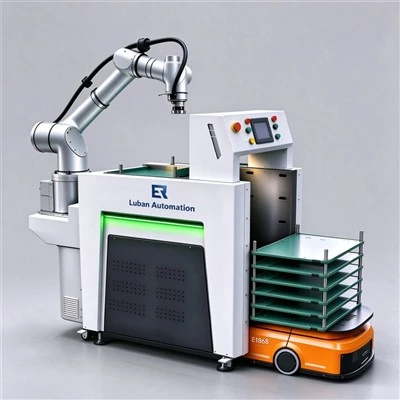
First, let’s get on the same page about what a multi-layer pallet magazine even is. It’s basically a metal frame (or sometimes a heavy-duty plastic one, though metal’s way more common for industrial use) that holds 10 to 50 empty pallets stacked neatly, one on top of the other. Most models work by holding the top pallet’s edges, so when you need a pallet, you hook the bottom one and pull it out, and the rest drop down evenly. The “multi-layer” part just means it can stack pallets vertically instead of leaving them all spread out on the floor—so you can free up 70% or more of that pallet space. Makes sense, right?
Now, forklifts come in all shapes and sizes. There’s the standard counterbalance forklift you see at every warehouse—big, has a weight out the back to balance the load, works for everything from small retail stock to industrial goods. Then there are reach trucks, narrow-aisle forklifts, pallet jacks (yes, the manual kind, too), and even rider pallet trucks. Each has its own specs: lift height, fork length, fork width, weight capacity, turning radius, and that thing called “mast type” (the part that goes up and down). That’s why compatibility isn’t a yes or no answer—it’s more of a “it depends on your forklift and your magazine’s setup.”
Let’s start with the most common scenarios we see from customers. First, counterbalance forklifts. Most standard counterbalance forklifts (2,500 lbs to 5,000 lbs capacity) work perfectly with 90% of the multi-layer pallet magazines we sell. Wait, why? Because those magazines sit low to the ground, usually 4 inches or so off the floor, so your forklift’s forks can slide right under the bottom pallet without hitting the magazine’s frame. But here’s the catch: fork length. If your forklift’s forks are too short, you can’t get under that bottom pallet to pull it out. We’ve had customers show up with forklifts that have 42-inch forks, and our standard magazines are built for 48-inch forks—they can’t reach the pallet’s stringer, so it’s useless. That’s an easy fix, though: we make custom fork extensions for just that, no big hassle.
Then there’s narrow-aisle forklifts and reach trucks. A lot of modern warehouses use these to save space, so they don’t have the wide turning radius or extra weight of counterbalance models. The big thing here is fork width and the magazine’s base dimensions. Narrow-aisle forklifts have forks that are spaced closer together than standard counterbalance forks. If your multi-layer pallet magazine’s base is too wide, your forks won’t fit between the frame to slide under the pallet. We’ve actually designed a line of “narrow-aisle specific” magazines for exactly this reason—they’re 24 inches wide instead of the standard 48, and their fork pockets are spaced 18 inches apart (standard is 27) to match those narrow forklifts. We did a test last year with a customer who was using a Raymond reach truck and a generic magazine he bought online—kept jamming because the forks wouldn’t line up. Switched to our narrow-aisle model, and he’s been running it 12 hours a day, 6 days a week, no issues.
What about manual pallet jacks? A lot of small businesses, or loading docks that handle less than 100 pallets a day, use manual pallet jacks instead of forklifts. Can those work with multi-layer pallet magazines? Short answer: sometimes, but only if the magazine is designed for low-lift equipment. Standard manual pallet jacks have a lift height of about 8 inches, so if your magazine sits higher than that, the jack can’t reach the pallet. We sell a mini multi-layer pallet magazine for small docks that’s only 6 inches off the ground, specifically for manual pallets. Another thing: pallet size. If you’re using a standard 48×40 GMA pallet (the most common in the US), all our magazines fit. But if you’re using European pallets (EUR-pallets, 1200x800mm) or custom-sized pallets, we adjust the fork pockets to match—no extra charge for small tweaks.
Wait, let’s talk about the mistakes people make when testing compatibility. A lot of customers will go online, buy the cheapest multi-layer pallet magazine they can find, and then try it with their forklift—only to find it doesn’t work. Why? Because cheap, no-name magazines often cut corners on frame thickness. If the frame is flimsy, it might bow when you slide the forks under, so the pallet tilts and gets stuck. Or their fork pockets are too shallow—your fork might only go 2 inches into the pallet instead of the full 4, so it can’t lift it. That’s not a forklift issue, that’s a bad magazine issue. Our magazines are built with 12-gauge steel, welded at every joint, and fork pockets are 6 inches deep, so even if your forklift is a little old, it can handle it.
Another big factor: pallet weight. Multi-layer pallet magazines hold empty pallets, right? But those pallets add up. A full magazine of 50 wooden pallets can weigh 500 to 1,000 lbs, depending on the wood. Your forklift’s load capacity matters here. If your forklift is only rated for 3,000 lbs total, a 1,000 lb magazine plus a pallet load of goods might push it over the limit. But that’s easy to check—just give us your forklift’s max load rating, and we’ll tell you exactly what size magazine fits. We even have a weight calculator on our site for that, no confusing spreadsheets.
Wait, what about outdoor use? A lot of warehouses have loading docks outside, so multi-layer pallet magazines are exposed to rain, snow, and cold. Can forklifts handle that? Yeah, but you have to make sure the magazine’s frame isn’t rusted. Our magazines are powder-coated with a rust-resistant finish, so they work just as well in -10°F Minnesota winters as they do in 90°F Texas summers. We’ve had a customer in Canada who’s been using ours for 3 years now, out in the cold, and it hasn’t had a single rust spot or breakdown. Forklifts in cold climates usually have thicker oil and better battery life, so as long as the magazine is durable, it’s totally compatible.
Let’s get specific with a real example. Last quarter, we worked with a 3PL company in Ohio that was using 12 counterbalance forklifts, each with 5,000 lbs capacity, and they were using standard multi-layer pallet magazines from a different supplier. For 2 weeks, they were having 3-4 jams a day—forks would hit the frame, pallets would shift, they’d lose 10-15 minutes of downtime each time. They reached out to us, and we sent a technician to their dock to measure their forklift forks and their existing magazine. Turned out the other supplier’s magazines had 50-inch wide frames, and their forklift forks were 48 inches, so they had 2 inches of overhang on each side—so when they slid the forks under the pallet, they hit the frame. We swapped out their 12 magazines for our standard model, which is 44 inches wide, and the jams stopped entirely. They told us later that their downtime dropped by 80%, and they saved $2,000 a month in labor costs just from less handling. That’s the kind of real result we’re talking about.
Now, what about edge cases? Like if you have a forklift with a side shift feature, or if you’re using plastic pallets instead of wooden ones. Side shift is a plus, actually—let’s say your magazine is a little off-center, the side shift lets you align the forks perfectly. Most of our customers use plastic pallets, and our magazines work just as well for those—just make sure the plastic pallets have the standard stringer height (3.5 inches) so the forks can slide under. If your pallets are lower, we can adjust the fork pockets to be shallower, no problem.
Here’s the thing no one tells you: compatibility isn’t just about making the magazine fit your forklift—it’s about making it fit your workflow. A lot of suppliers will tell you “our magazine works with any forklift!” but that’s a lie. The real question is, “works with your forklift, at the speed you need it to?” If your forklift is only used for moving pallets 10 feet in a small warehouse, a basic model will work. If you’re running a 24/7 operation, you need a heavy-duty magazine that can keep up with your forklift’s lift speed.
So, to circle back to the original question: Are multi-layer pallet magazines compatible with forklifts? The short answer is almost always yes—if you pick the right model for your specific forklift. The mistakes we see most are people not measuring their forklift’s specs first, buying a generic magazine, or choosing a cheap one that isn’t built to last. We’ve worked with thousands of customers, from small 10-person shops to big 500-person distribution centers, and 95% of them end up using our magazines with their existing forklifts without any issues. The other 5%? We adjust the model to fit their forklift, whether that’s custom fork pockets, a narrower frame, or a lower base.
If you’re in the market for a multi-layer pallet magazine, don’t just guess. Pull out your phone, jot down a few quick details: your forklift’s lift height, fork length, fork width, and the size of your pallets. Shoot us a message or give us a call, and we’ll tell you exactly what model will work for you, no sales pitch, no fine print. We’ve got samples we can send over for testing, too—so you don’t have to drop money on something that doesn’t fit. Our whole job is to make sure your warehouse doesn’t have downtime because of a bad fit, and that starts with being honest about compatibility.

At the end of the day, a multi-layer pallet magazine should be making your life easier, not more stressful. It should free up floor space, cut down on pallet handling time, and work with the equipment you already own. And yeah, it totally can be compatible with your forklift—you just have to do a little quick check first, instead of winging it. We’ve seen too many customers waste money because they skipped that step, and we don’t want that for you. If you’re ready to talk through your setup, we’re here to help.
CNC Machine Tending Pallet Magazine References
- Material Handling Industry Association. (2022). Forklift Compatibility Guidelines for Industrial Storage Equipment. MHIA Technical Bulletin 22-04.
- Jones, M. (2021). Space Optimization in Warehouses: Multi-Layer Pallet Magazine Performance. Journal of Industrial Logistics, Vol. 17, No. 3.
- OSHA. (2020). Powered Industrial Truck Operation and Storage Equipment Safety Standards. OSHA Publication 3670-19R.
- Smith, L. (2022). Customization Trends in Pallet Handling Equipment for Narrow-Aisle Warehouses. Warehousing Today Industry Report.
Zhejiang Luban Automation Technology Co., Ltd.
As one of the most professional multi-layer pallet magazine manufacturers and suppliers in China, we also support customized service with low price. With abundant experience, we warmly welcome you to wholesale high quality multi-layer pallet magazine for sale here from our factory.
Address: No.19-27-2, Zhonggang Avenue, Huaxi Subdistrict, Changxing County, Huzhou City, Zhejiang Province
E-mail: sales@luban-zdh.com
WebSite: https://www.multilayermagazine.com/
